
Actively hiringWST-990987
Registered Respiratory Therapist (RRT)
$2,300 – $3,000per week
Tillamook, OR
Allied Health
ContractDay13 Wks
Your respiratory career. Your next chapter.
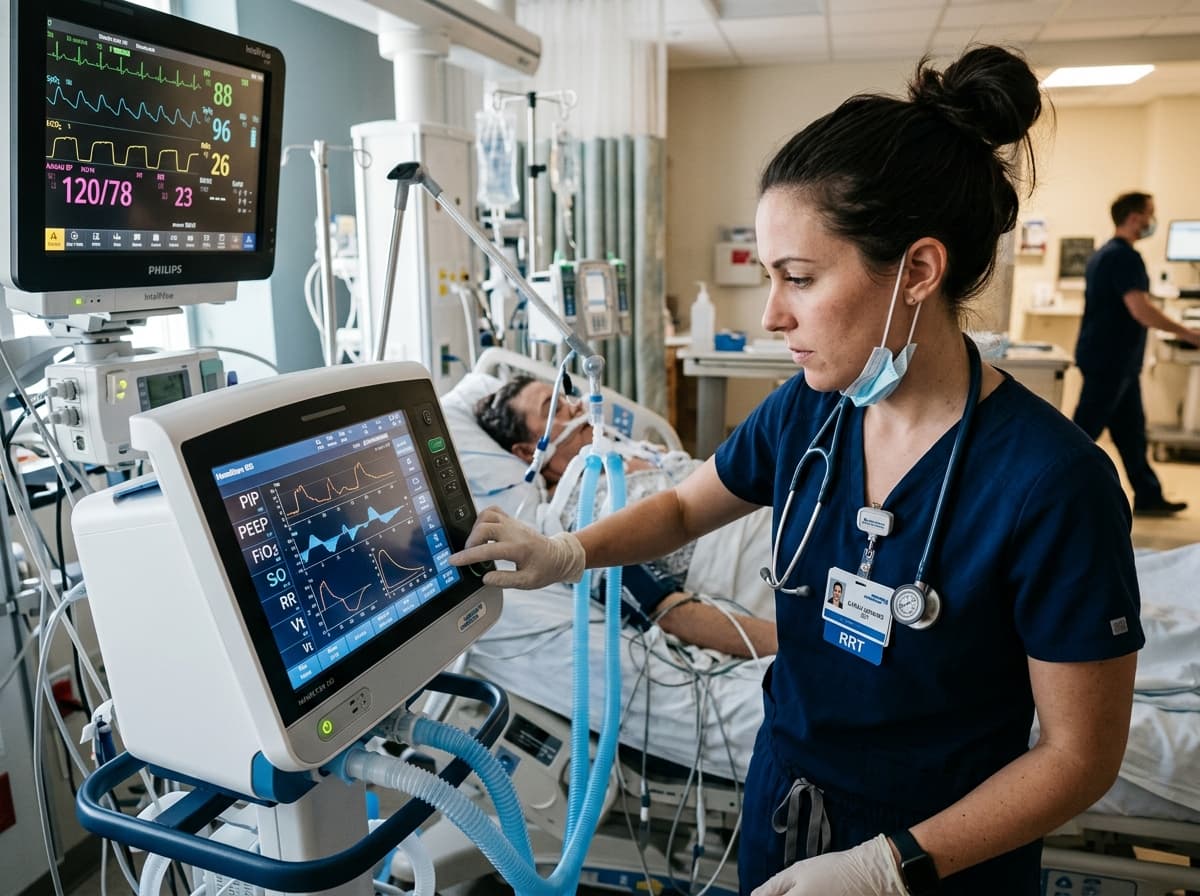
Respiratory therapists are called first when a patient stops breathing well and last when they are ready to go home on oxygen. That range, from a ventilator in an intensive care unit to a nebulizer in someone's living room, is why respiratory therapist jobs vary so much more than the job title suggests.
Employers post these as RT jobs, respiratory care jobs and respiratory therapist positions, and they mean the same thing. We staff all of them across the United States.
Verified openings
Tillamook, OR
Allied Health
Ypsilanti, MI
Allied Health
Dansville, NY
Allied Health
Jamaica Plain, MA
Allied Health
Newport, OR
Allied Health
Filter by shift, contract length, facility setting and state.
Respiratory therapy has two credential levels from the National Board for Respiratory Care. Certified respiratory therapist is the entry level, and registered respiratory therapist is the advanced one.
This is not the same arrangement as PT and PTA or OT and COTA, where the assistant holds a separate license and works under supervision. CRT and RRT are steps on one ladder, and an RRT is a CRT who went further.
It matters for job hunting because most RRT jobs in hospitals are advertised as RRT only, particularly for intensive care, neonatal and transport work. CRT jobs are more common in long term care, sleep labs and home care. If you hold the CRT and want acute care contracts, that gap is usually the thing standing in the way rather than experience.
The credential is national. The license is not. Almost every state licenses respiratory therapists separately, and respiratory therapy has no interstate compact in general use, unlike nursing and physical therapy. Crossing a state line means a fresh application every time, and turnaround runs from a couple of weeks to a couple of months depending on the board.
From the ICU to the living room
Intensive care, emergency and step down. Ventilator management, intubation support and rapid response. The largest source of contract work and almost always RRT only.
NICU respiratory therapist jobs are among the hardest posts in the country to fill. Different equipment, different margins for error, and facilities will wait for the right person.
Sleep lab and pulmonary function testing. Predictable hours, no ventilator alarms, and a very different working day from the floor.
Flight respiratory therapist jobs and ground critical care transport. Small in number, heavily contested, and usually needing several years of intensive care behind you.
DME respiratory therapist jobs cover home oxygen, ventilators and sleep equipment, teaching patients and families rather than treating at the bedside.
Skilled nursing and long term acute care. Steadier pace, ventilator weaning, and a setting where CRT credentials are more widely accepted.
Facilities normally ask for 1 to 3 years in the setting, and for respiratory therapy the equipment matters as much as the years. A therapist who has run one ventilator platform for five years still needs orientation on another, and units that are short staffed rarely have time to give it.
Tell a recruiter which ventilators, which monitors and which patient population you have actually worked with. It changes which contracts are realistic more than the total number of years does.

Recent experience.
The right opportunity.
What moves the rate

Credential level, setting and shift pattern move the number more than location does. Nights and weekends carry differentials that can be worth more than the base gap between two states.
Respiratory therapist pay explained, including shift differentials and credential levels.
Respiratory therapy runs more PRN work than most professions, because units flex respiratory cover shift by shift as census and acuity move. PRN respiratory therapist jobs suit anyone who wants to pick up around another commitment, and they are also how a lot of therapists try a hospital before committing to it.
Choose your next location

Most hospital contracts specify RRT, and intensive care, neonatal and transport work almost always does. CRT opens long term care, sleep labs and home care. If you hold the CRT and want acute work, upgrading is usually a bigger unlock than another year of experience.
No. The credential is national but the license is not, and nearly every state licenses respiratory therapists separately. There is no widely adopted compact, so a move normally means a new state application alongside the credential you already hold.
Usually 1 to 3 years, though equipment familiarity often counts for more. Say which ventilator platforms you have used, because that is frequently what decides a submission.
Yes, more than in most allied professions. Respiratory cover flexes with census and acuity rather than sitting at a fixed headcount, so hospitals carry PRN therapists to absorb the swings.
It is one of the harder moves in the profession. The equipment, the ventilation strategies and the tolerances are different enough that neonatal units generally want neonatal experience rather than transferable critical care. Going the other way, from neonatal into adult, is usually easier.
A recruiter needs three things to be useful to you: your credential level, the ventilator platforms you have run, and where you are licensed. Everything else follows from those.
Respiratory therapist hiring runs all year here, and a fair number of our respiratory therapist vacancies are filled before they are advertised. Careers in respiratory care move between critical care, diagnostics and home care more often than people expect, so a respiratory therapist career change is worth a conversation rather than a rewrite of your resume. Our respiratory therapist pay page covers rates. Our travel nursing page covers how contracts and housing work.