
Actively hiringWST-990905
Registered Nurse (RN) - Medical-Surgical (Med/Surg)
$2,700 – $4,000per week
St. Helena, CA
Nursing
ContractDay13 Wks
Your nursing career. Your next chapter.
Travel nursing means taking a fixed term contract at a facility away from home, usually because they are short staffed and need someone who can work independently from the first shift. You keep your own license, you are paid for the assignment, and when it ends you decide where to go next.

Verified openings
St. Helena, CA
Nursing
Fort Bragg, CA
Nursing
Sweetwater, TX
Nursing
Glendale, CA
Nursing
Kailua, HI
Nursing
Filter by shift, contract length, facility setting and state.
Usually 8–12 weeks. Shorter crisis contracts exist and pay differently.
Common when an assignment is going well and the facility still needs cover. You are not obliged to accept one.
Most contracts guarantee a number of hours per week. Ask what happens if the unit cancels a shift, because that varies more than the headline rate does.
Either side can end a contract. What matters is the notice period and how quickly you are found something else, and both should be agreed before you accept.
Home away from home

Two things are worth understanding before you choose. Agency placed housing removes the work of finding somewhere but gives you less control over where and what. A stipend gives you the choice and the risk, and it only stretches as far as local rents allow, which varies enormously between assignments.
How housing money is treated for tax.The bar is set by the facility, not by us, and 1 to 3 years is what most of them ask for. The reason is simple arithmetic: they are short now, so they need someone billing from the first week rather than shadowing for a month.
Nursing, therapy and allied health all travel. So do surgical technologists, imaging technologists and pharmacists, and the arrangement works the same way for each of them.
You need to be licensed in the state where the facility is. Nurses in compact member states can use a multistate license. Therapists, technologists and pharmacists each work to their own board, and processing times range from a fortnight to a full quarter.
Start the application before you choose an assignment rather than after. A license in progress is what usually decides whether you can take a contract that starts in four weeks.
The first contract is the one people find hardest, and it is rarely the clinical work that makes it hard.
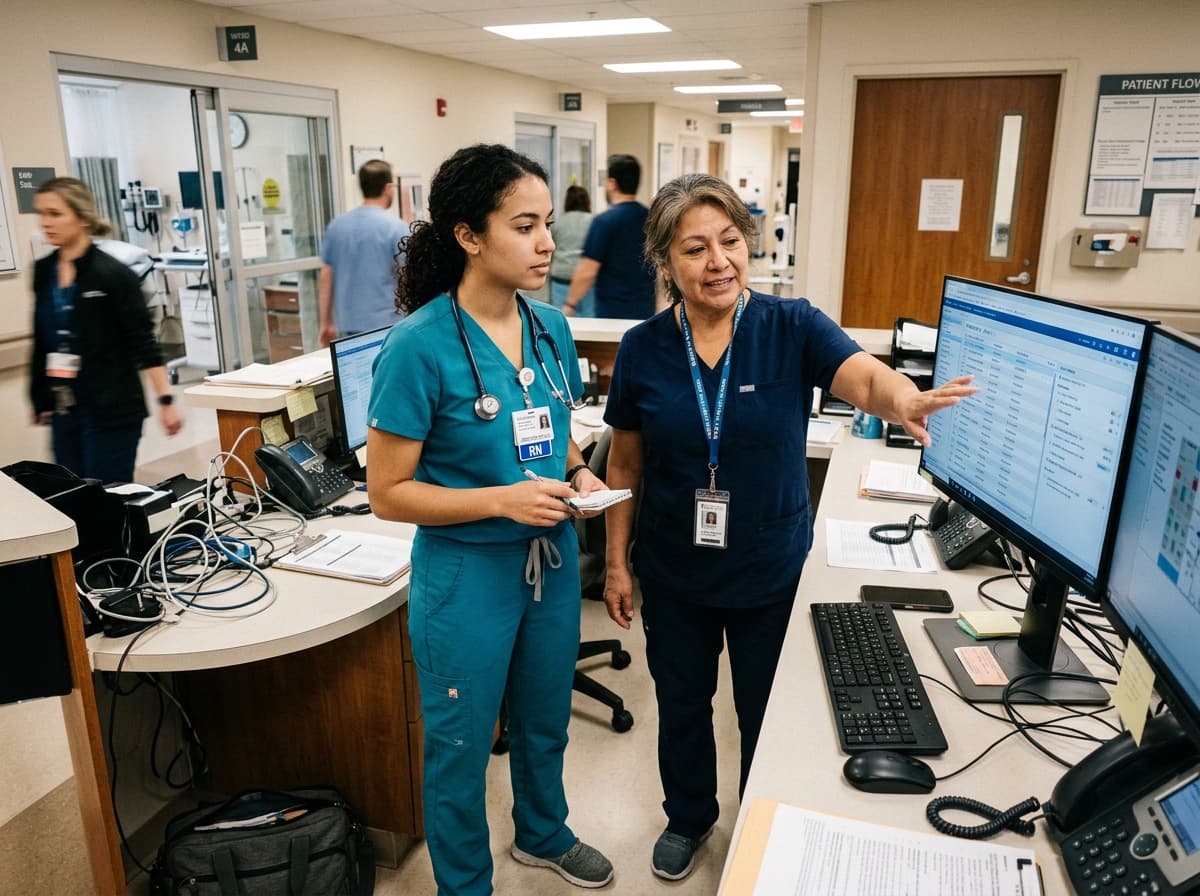
Often a day or two. You are there because they are short, not because they have time to train.
Different charting system, different supply room, different escalation path. Ask early rather than at the point you need it.
Travellers usually float before staff do. Your contract should say which units, and it should only be units where you have demonstrated competency.
Credentialing, licensure and compliance take longer than most people plan for. Start before you have chosen the assignment, not after.
Plan the next move
The part nobody explains is the gap. A contract ends, the next one starts three weeks later, and in between you are not being paid.
Submissions for your next assignment usually go out six to eight weeks before your current one ends, not after it.
A license you stopped renewing is slower to reinstate than one you kept. The same applies to certifications and immunisation records.
If the facility still needs cover and the assignment is going well, extending avoids the gap entirely and there is no new credentialing.
A recruiter who knows your plans in advance can line the next contract up. One who finds out when you call is starting from nothing.
Choose your next location

Travel nursing is taking a fixed term contract at a facility away from home, usually because they are short staffed. You remain licensed in your own name, you are paid for the assignment, and at the end of it you choose whether to extend, move on, or stop.
8–12 weeks is typical. Shorter crisis contracts exist and pay differently, and extensions are common when an assignment is going well.
[ housing answer ]
Usually 1 to 3 years, though it varies by facility and by how urgently they need cover. A unit that is desperate will sometimes take less experience than its own advert asks for.
[ cancellation answer: what notice applies, what the nurse is owed, and what we do to find a replacement contract ]
Often yes, but it changes the housing arrangement and it needs to be agreed before you accept a contract rather than after. Tell your recruiter at the start.
Pick the states, tell us the specialty, and we will tell you what is open.