
(866) 680-2920
We-Care Logo

Blog

Guidance on travel contracts, licensure, pay and life on assignment — written for nurses, therapists and allied health professionals deciding where to go next.

Insights

From the We Care Staffing desk

42 articles

Is Travel Nursing Worth It in Wyoming? Pay & Demand in a Low-Population State

Wyoming is the least populous state in the country, and that single fact shapes everything about travel nursing there. Fewer people means fewer hospitals, fewer patients, and far fewer job openings than in California or Texas. So the honest question isn't just "how much does it pay?" but "is it even worth pursuing?" The answer is a qualified yes, for the right nurse, and this guide explains exactly who that is.

Read article
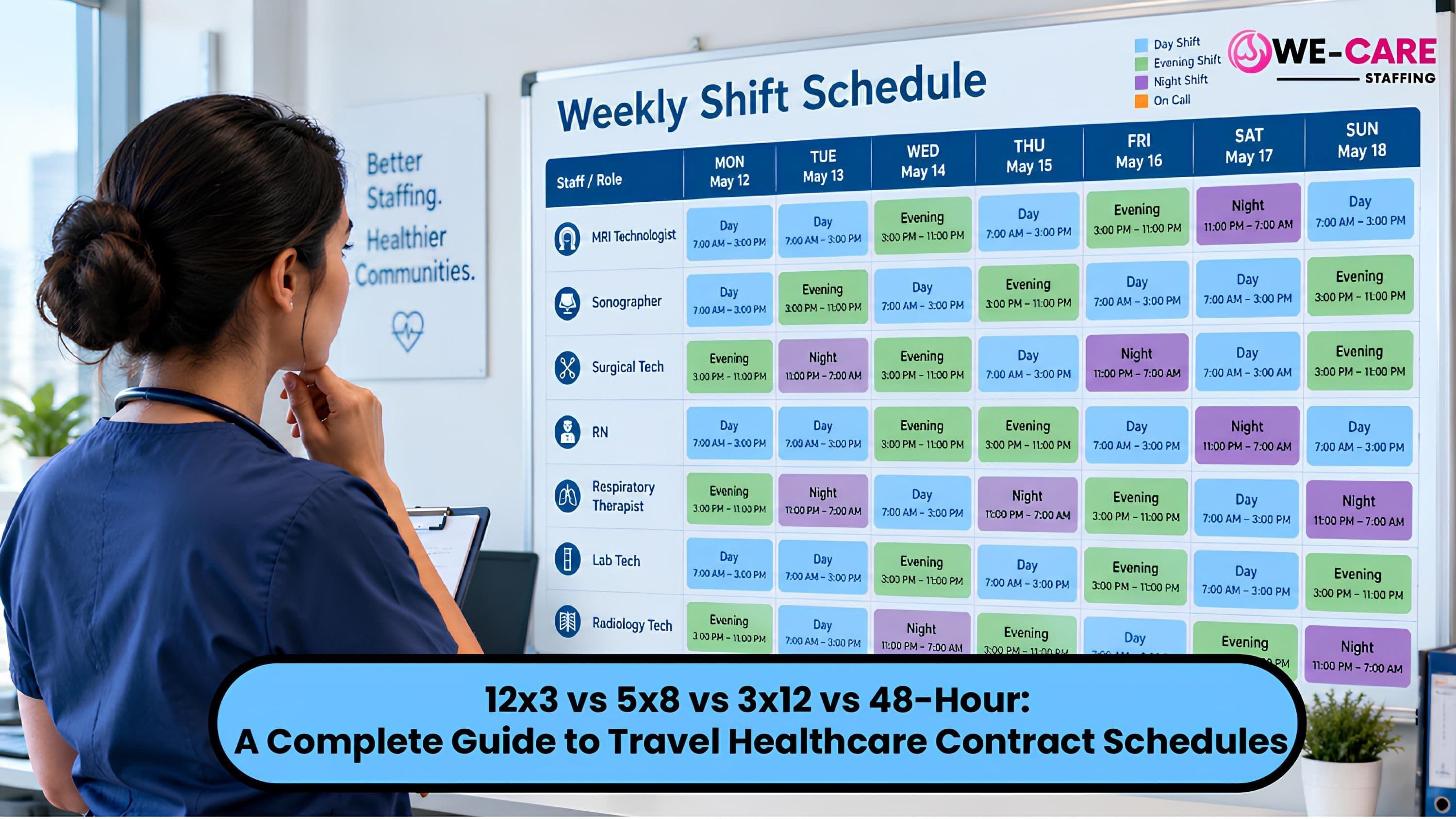
12x3 vs 5x8 vs 3x12 vs 48-Hour: A Complete Guide to Travel Healthcare Contract Schedules

Before you sign a travel contract, one line in it shapes your entire assignment: the schedule. It determines how many days you work, how long each day runs, how much you earn, and how tired you'll be by the end of a 13-week stretch. The shorthand can look cryptic, 3x12, 12x3, 5x8, 48s, and the wrong choice for your life can turn a great-paying contract into a miserable one.

Read article

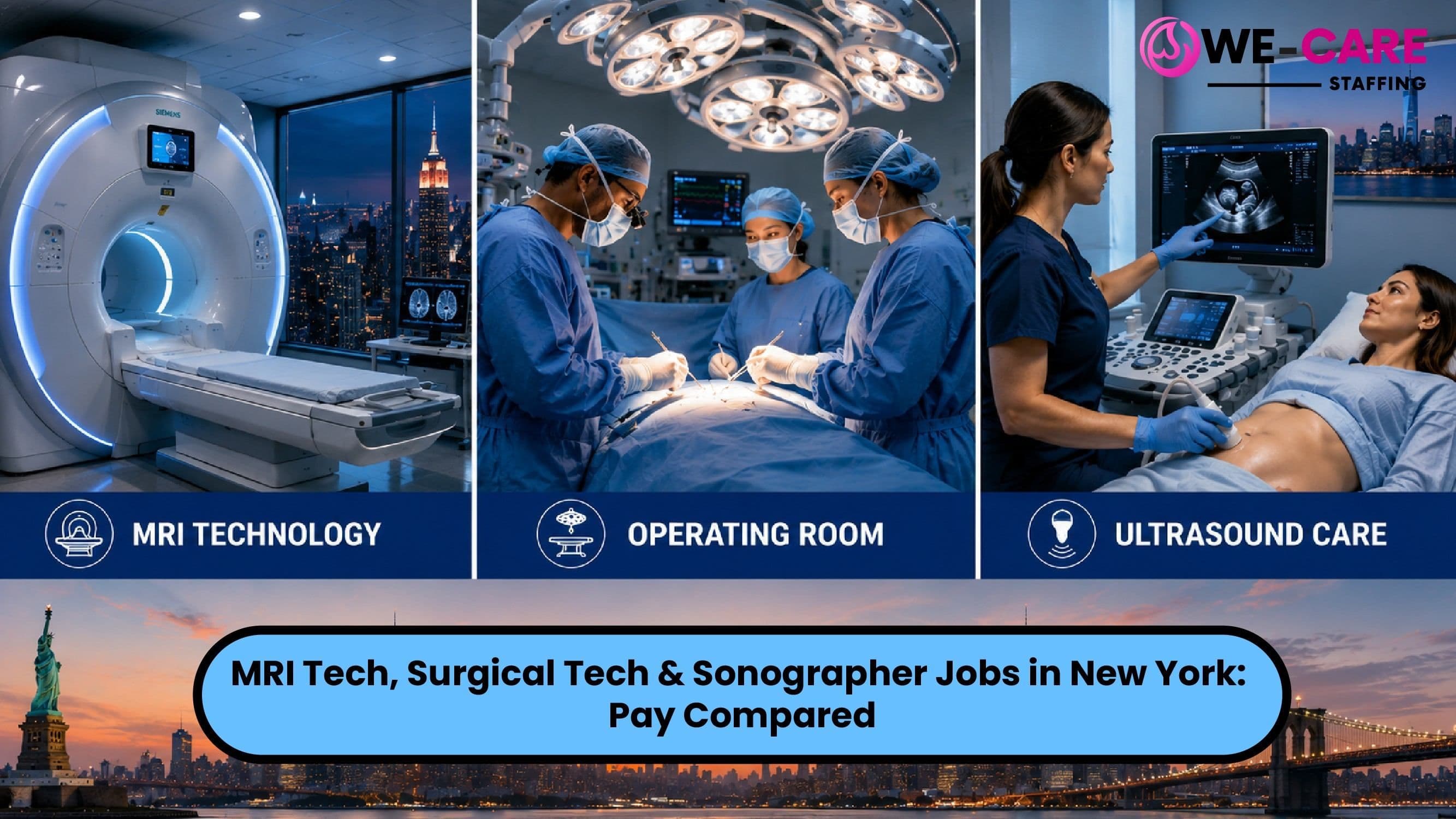
MRI Tech, Surgical Tech & Sonographer Jobs in New York: Pay Compared

Allied health is one of the smartest career bets in New York: strong pay, steady demand, and shorter training paths than nursing or medicine. But not all allied roles pay the same, and the differences are bigger than most people expect. Among three of the most popular imaging and surgical professions, MRI technologist, diagnostic medical sonographer, and surgical technologist, two cluster near six figures in New York while the third sits well below, and each has completely different licensing rules.

Read article

12-Hour Shifts, Night Shifts & 48-Hour Contracts for California RNs

If you're an RN working in California, your schedule isn't just a lifestyle choice, it's a pay calculation governed by some of the strongest labor laws in the country. California's overtime rules work differently from most states, and understanding them is the difference between accepting a 48-hour contract that pays beautifully and one that quietly shortchanges you. The good news: when the rules are followed, California rewards long-shift and night-shift nurses generously.

Read article

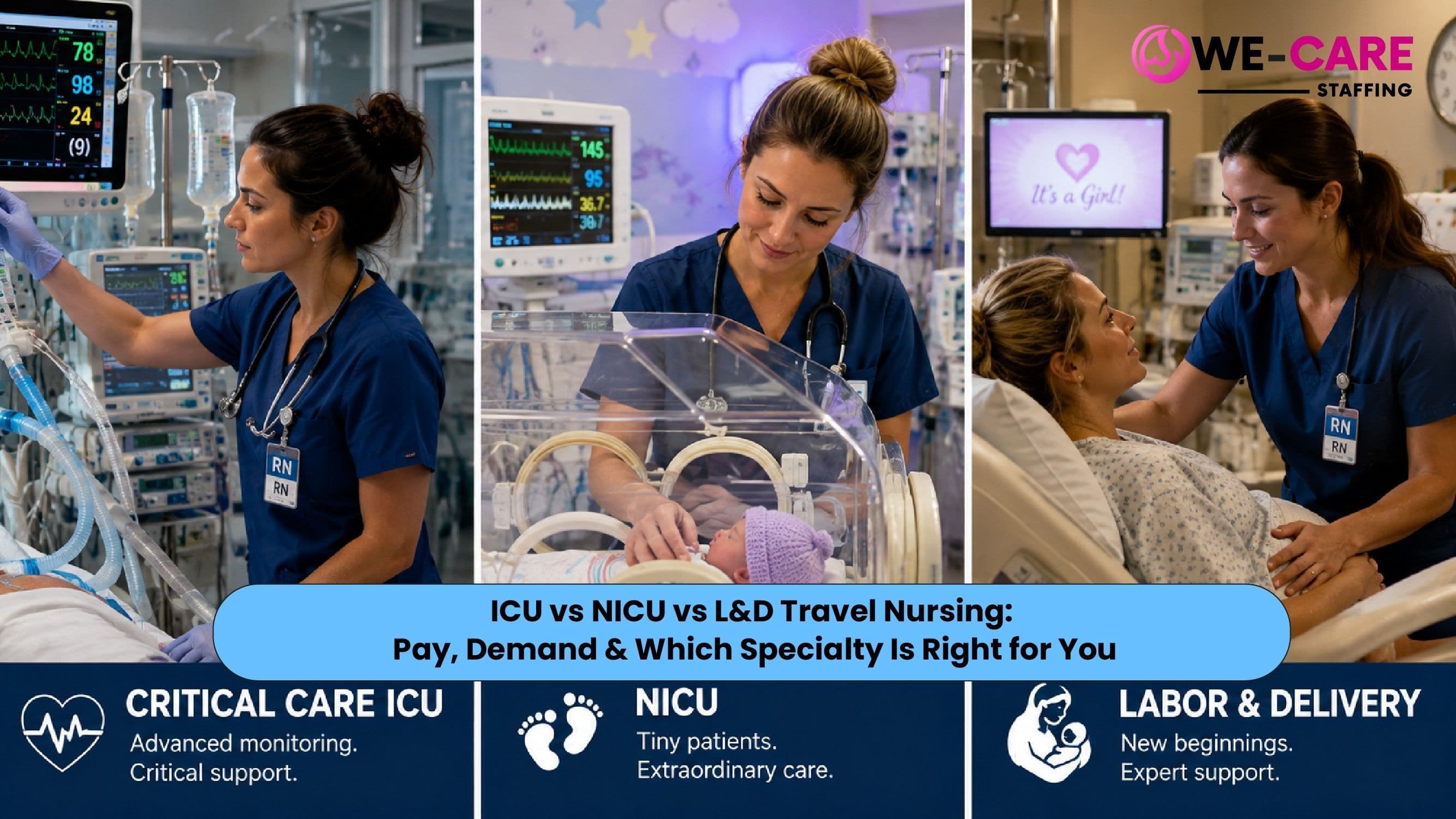
ICU vs NICU vs L&D Travel Nursing: Pay, Demand & Which Specialty Is Right for You

Three of the most in-demand travel nursing specialties, intensive care (ICU), neonatal intensive care (NICU), and labor and delivery (L&D), all pay well, all stay busy, and all ask something very different of you. Choosing between them isn't just about the highest weekly rate. It's about the kind of patients you want, the emotional weight you can carry, and the career you can sustain for years, not just one contract.

Read article

Travel Nursing in Montana: Pay, Lifestyle & License Requirements

Montana is the assignment nurses take for the experience, not just the paycheck. Big Sky Country offers something few other travel markets can: a genuine mix of small-town and rural "frontier" nursing, high clinical autonomy, and some of the most beautiful country in the United States right outside your door. The pay is solid and competitive rather than premium, and thanks to compact licensing, getting to work is refreshingly simple.

Read article

Registered Nurse Jobs in Pennsylvania: Philadelphia vs Pittsburgh Salary Guide

Pennsylvania is one of the largest nursing markets in the country, anchored by two very different big cities, world-class academic medicine in both, and a piece of news that changes the picture for travel nurses: as of July 2025, Pennsylvania is a compact license state. Pay sits near the national average, cost of living is reasonable across most of the state, and between Philadelphia and Pittsburgh there's a genuine debate about which metro actually pays nurses more.

Read article

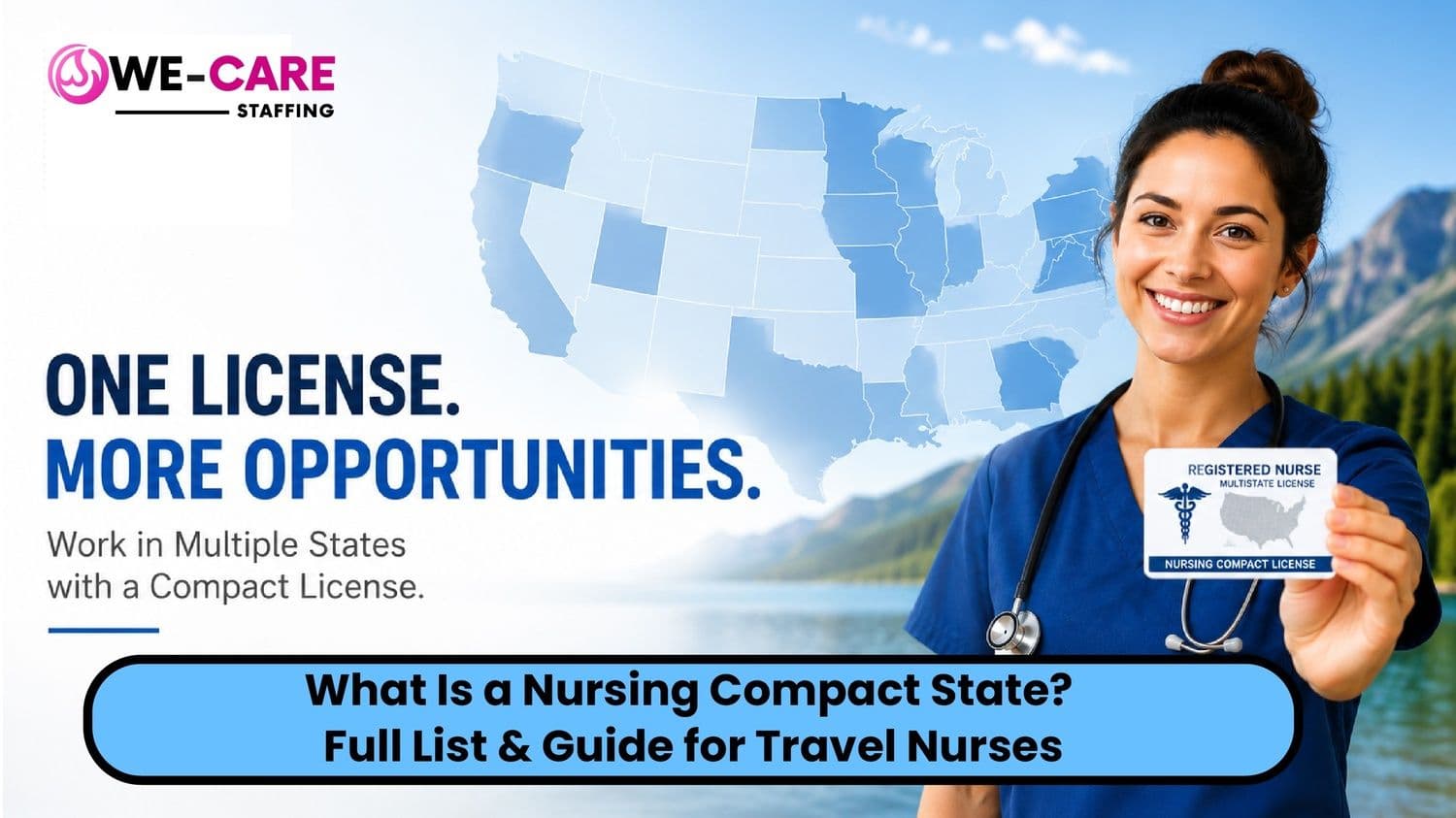
What Is a Nursing Compact State? Full List & Guide for Travel Nurses

For a travel nurse, one piece of paper can be the difference between starting a contract next week or waiting three months. That paper is a multistate license, and whether you can use it comes down to a single question: is the state a nursing compact state?

Read article

Registered Nurse Jobs in Wisconsin: Milwaukee vs Madison Pay

Wisconsin is a solid, steady market for registered nurses, and it comes with an advantage that high-pay states like California and New York can't offer: it's a compact license state, so many out-of-state nurses can start working without a separate application. Pay sits near the middle of the pack nationally, cost of living is reasonable, and between the state's two anchor markets, Milwaukee and Madison, there's a real and useful pay difference worth understanding before you sign.

Read article
Showing 19 of 42 articles

We use cookies to enhance your browsing experience, personalize content, and analyze site traffic. By clicking “Accept All”, you consent to our use of cookies.