Ward supply chain and cleanroom compounding
Pharmacy Technician
Jobs
A pharmacy technician prepares and dispenses medication under a pharmacist, manages inventory and, in a hospital, often compounds sterile products for patients who cannot take anything by mouth. The work is closer to the patient than most people outside pharmacy assume.
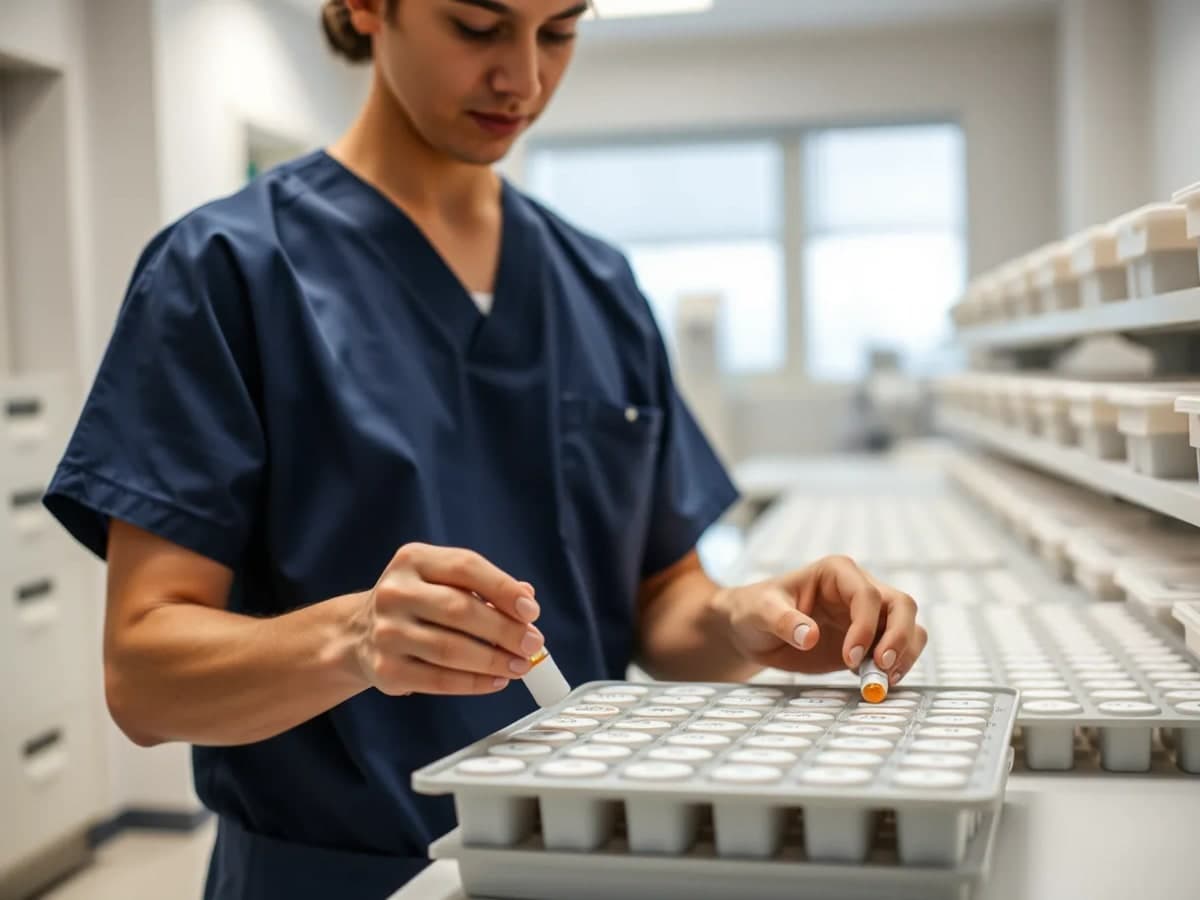
Our pharmacy technician jobs sit in hospitals, inpatient units, sterile compounding rooms and long term care, on travel, contract or permanent posts.
Verified openings
Current Pharmacy Technician Jobs
Travel Pharmacy Technician
Crookston, MN
Pharmacy Technician
View all 4 Pharmacy Technician positions
Filter by shift, contract length, facility setting and state.
Pharmacy tech, pharmacy technician or pharmaceutical technician?
Pharmacy technician is the formal title. Pharmacy tech jobs is what everyone types. Pharmaceutical technician turns up on listings and means the same thing, though it is also used in manufacturing, which is a different industry entirely.
Some hospitals grade the role, so pharmacy technician I and II appear on job boards as separate postings. The grade usually reflects certification and sterile compounding training rather than a different job.
What a technician does and does not do
A pharmacy technician prepares, compounds and dispenses medication, manages inventory and handles the paperwork around it. A pharmacist verifies every order before it reaches a patient, counsels patients, and makes the clinical judgement calls. That final check is the line, and it does not move.
A handful of states run tech check tech programs, where an experienced technician can verify another technician’s work in limited circumstances. It is the exception rather than a change to the rule.
Hospital-first staffing
Where pharmacy technicians work
Retail is where most technicians start. It is not where most of the interesting work is.
Hospital and inpatient
Hospital pharmacy technician jobs cover cart fill, automated dispensing cabinets, controlled substance records and code cart restocking. Inpatient pharmacy technician roles run shifts around the clock, because the pharmacy never closes.
Sterile compounding
IV room work under USP Chapter 797 for sterile products and Chapter 800 for hazardous drugs, including chemotherapy. The best paid technician work and the hardest for facilities to fill, because the training is specific and the standards are audited.
Long term care
Closed door pharmacies serving skilled nursing and assisted living. High volume, cycle fill, and almost no counter contact. Steady hours and usually no nights.
Specialty and infusion
Oncology, infusion centers and specialty pharmacy. Smaller teams, more prior authorization work, and a narrower but better paid market.

Certification, state registration and what hospitals actually require
Certified pharmacy technician jobs are the majority of what we place. Two bodies certify in the United States. The Pharmacy Technician Certification Board awards the CPhT, which is what most hospital requisitions name. The National Healthcareer Association awards the ExCPT, which is recognized in many states but not universally by hospitals.
On top of the credential, every state does something different. Some register technicians, some license them, some set a minimum age or a training requirement, and a few regulate barely at all. No compact exists, so a move means starting again with that state board. Check the specific state before you plan around it rather than assuming your current registration travels.
If you are working uncertified, hospital work is the hardest door to open. Retail and some long term care settings will hire without it, but inpatient pharmacy usually will not, and sterile compounding almost never does.
Source: National Association of Boards of Pharmacy, state boards of pharmacy regulation reviews. Verified September 2026.
What the numbers say
What pharmacy technicians earn

Half the profession earns more than 45,750 dollars a year and half earns less, on May 2025 Bureau of Labor Statistics data. That is about 22 dollars an hour. The middle band runs from 37,850 to 49,990 dollars, and the top tenth clears 61,040. Forecast growth is roughly 6 percent through 2034, or some 49,000 openings a year.
Those figures are pulled down by retail, which employs most technicians. Hospital and sterile compounding work pays above them, and contract rates are calculated on a different basis again.
For the other side of that gap, how pharmacist and technician pay compare is covered on the pharmacist pay page.
Source: Bureau of Labor Statistics, Occupational Employment and Wage Statistics (OEWS). May 2025 data.
Pharmacy technician pay by setting, and why hospital and retail are not comparable.
How much experience contracts ask for
Retail experience counts for less than most technicians expect when moving into a hospital.
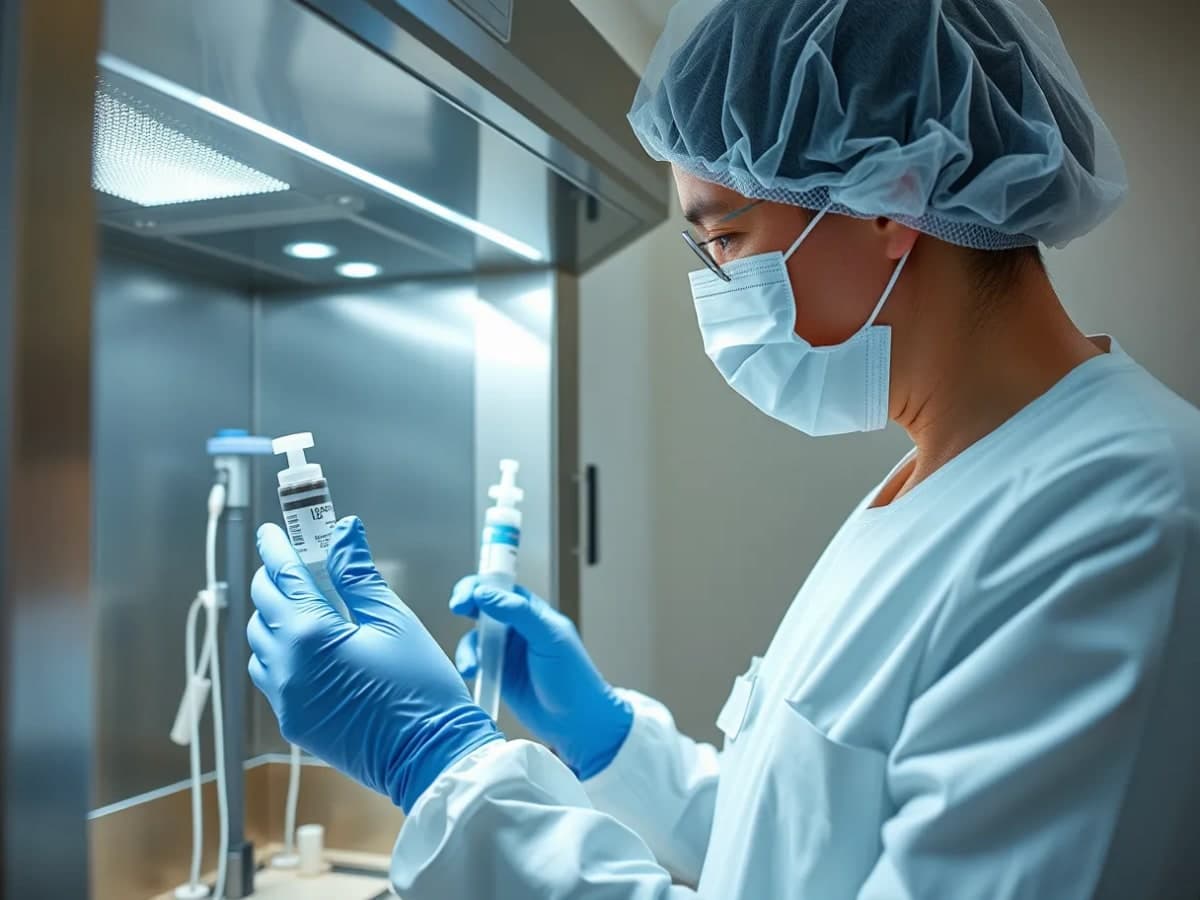
Cleanroom & inpatient.
The right opportunity.
Travel, contract and permanent
All three are open. Short contracts and float cover are common in hospital pharmacy, because departments need weekend and overnight verification without carrying the headcount for it.
Nothing here fits?
Hospital pharmacy runs on a rota that changes weekly, and cover gets filled quickly. Tell us your certification, the settings you know and whether you have IV room experience. Ring (866) 680-2920 or send your details through.
Ring (866) 680-2920 or send your details through.
Choose your next location
Pharmacy technician jobs by state
Showing 12 of 50 states
- AlabamaSearch jobs
- AlaskaGuide & jobs
- ArizonaGuide & jobs
- ArkansasSearch jobs
- CaliforniaGuide & jobs
- ColoradoGuide & jobs
- ConnecticutSearch jobs
- DelawareSearch jobs
- FloridaSearch jobs
- GeorgiaSearch jobs
- HawaiiGuide & jobs
- IdahoSearch jobs
States marked “Guide & jobs” have a dedicated guide for this role. Every other state opens a filtered job search.
Frequently asked questions

What does a pharmacy technician do in a hospital?
A hospital pharmacy technician keeps the wards supplied with medication. That means filling carts, stocking automated dispensing cabinets, keeping controlled substance records straight and restocking code carts. Many also work in the cleanroom compounding intravenous medications. There is no counter and no customer. The technician sits inside the ward supply chain instead.
Do I need to be certified?
Certification is effectively required for hospital work. Most inpatient requisitions name the CPhT credential, several states mandate certification by law, and sterile compounding roles almost never accept an uncertified technician. Retail and some long term care settings are more flexible.
Is hospital pharmacy different from retail?
Hospital and retail pharmacy technician work are genuinely different jobs. Hospital technicians supply wards rather than serve customers, work shifts around the clock, handle controlled substances under tighter records, and frequently compound sterile products. Retail experience transfers less easily than most technicians expect.
What do pharmacy technicians earn?
The national middle sits at 45,750 dollars a year, roughly 22 dollars hourly, on May 2025 Bureau of Labor Statistics data. Half the profession earns between 37,850 and 49,990 dollars, and the top tenth clears 61,040. Retail drags that figure down because it employs most technicians, so hospital and cleanroom work reads higher, and agency rates are built on another basis entirely.
Is sterile compounding worth training for?
Sterile compounding is the most reliable way for a technician to increase both pay and the number of roles open to them. IV room work is consistently hard for hospitals to fill, and it is the one technician skill agencies get asked for by name. The route in is usually a Compounded Sterile Preparation certificate on top of the CPhT, plus documented cleanroom hours. Some hospitals will train an experienced technician into the IV room, which is worth asking about before assuming you need the certificate first.
Talk to a pharmacy recruiter
Three things to send: the credential you hold, where you have worked, and whether you have cleanroom hours behind you. Pharmacy technician careers widen one skill at a time, and sterile compounding is the skill that opens the most doors.
If you are working towards the pharmacist route, our pharmacist page covers what that market looks like.