Actively hiring
Retail Pharmacy Pharmacist
$3,105weekly pay
Ukiah, CA
Pharmacist · Retail Pharmacy
ContractDay16 Wks
The last check before the patient
A pharmacist verifies that every medication reaching a patient is correct in drug, dose, route and timing, and safe against everything else that patient is taking. In a hospital that means order verification, dosing protocols and being the person the floor calls when something does not look right.

Pharmacist jobs on our books sit in hospitals, clinics, ambulatory care and long term care nationwide, as travel, contract or permanent posts.
Verified openings
Ukiah, CA
Pharmacist · Retail Pharmacy
Muskogee, OK
Pharmacist · Pharmacist - Pharmacy
Filter by shift, contract length, facility setting and state.
One license, four jobs
Few professions vary as much between settings as pharmacy does. The license is the same in all four. Almost nothing else is.
Order verification, sterile compounding oversight and dosing protocols. Hospital pharmacist jobs and staff pharmacist roles run shifts rather than office hours, and most include evening or overnight cover.
Rounding with a medical team rather than working from the pharmacy. Clinical pharmacist jobs sit here, along with critical care, emergency medicine, infectious disease and pediatric pharmacist posts. Most ask for residency training or equivalent experience.
Outpatient clinics, anticoagulation and chronic disease management. Ambulatory care pharmacist work is closer to direct patient contact than any other setting and usually keeps clinic hours.
Skilled nursing and assisted living, usually as a consultant pharmacist covering several facilities. Regulatory review and medication regimen review make up most of the work, and the hours suit people who want no night cover.
Licensure is state by state and there is no compact. Every move means a new board application, and pharmacy boards are among the slower ones in healthcare.
Transfer through NABP reciprocity is the usual route for anyone already licensed elsewhere. It beats examining again by a wide margin but still runs to weeks rather than days, and several states add a jurisprudence exam on their own pharmacy law.
Start the transfer before you pick an assignment. In pharmacy the board, not the contract, sets your start date.
What the numbers say
Few healthcare roles outside medicine pay as well. Bureau of Labor Statistics data for May 2025 records a median of 140,910 dollars a year, with ten percent of pharmacists below 99,290 dollars and ten percent above 174,230 dollars. Around 322,000 pharmacists are working in the United States, and BLS expects 5 percent growth through 2035 with some 12,500 openings a year.
Those figures describe permanent employment and they lean toward retail, because that is where most pharmacists work. Hospital and clinical contract rates are built on a different basis, and the setting moves the number more than the state does.
Source: Bureau of Labor Statistics, Occupational Outlook Handbook, Pharmacists. May 2025 wage data.
Hospital order verification experience will not by itself open a clinical rounding post, because those normally ask for PGY1 residency training or several years standing in its place.

Your settings.
The right opportunity.
All three are open. Short contracts and float cover are common in hospital pharmacy, because departments need weekend and overnight verification without carrying the headcount for it.
Of the twelve professions we recruit into, this has the smallest candidate pool. Departments often call us before anything is advertised, so pharmacist hiring here rarely starts with a job board. Get on the bench and you hear first.
Ring (866) 680-2920 or send your details through.
Choose your next location
Showing 12 of 50 states
States marked “Guide & jobs” have a dedicated guide for this role. Every other state opens a filtered job search.
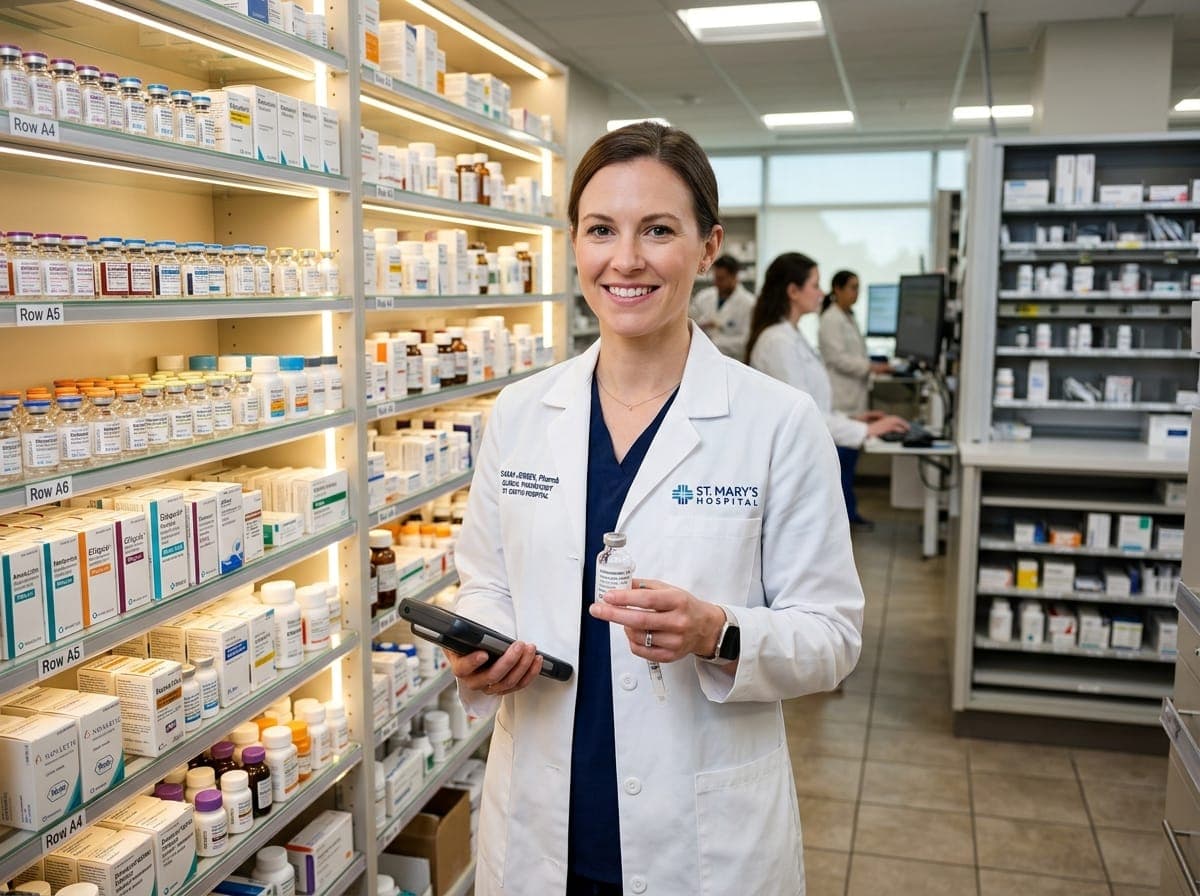
A hospital pharmacist verifies medication orders before they reach a patient, checking drug, dose, route and interactions against everything else the patient is taking. The role also covers dosing protocols, sterile compounding oversight and answering clinical questions from the floor. It differs from retail pharmacy in that the patients are inpatients and the pharmacist is part of the treating team rather than dispensing at a counter.
Every state licenses separately and pharmacy has no interstate compact. NABP reciprocity is the normal transfer route for someone already licensed elsewhere, and it beats sitting the exam again, but it still runs to weeks rather than days. Several states add a jurisprudence exam on their own law on top of that.
PGY1 residency training is the standard ask for a clinical post, though several years of equivalent hospital experience will often stand in its place. Critical care, infectious disease and oncology roles frequently want PGY2 on top. Staff and order verification positions are generally open without any residency, which makes them the practical way into hospital pharmacy from another setting.
Median pay reached 140,910 dollars a year in May 2025 on Bureau of Labor Statistics figures, with ten percent below 99,290 dollars and ten percent above 174,230 dollars. Retail employment pulls that national median, so hospital and clinical figures sit differently, and contract rates are calculated separately again.
Inpatient pharmacy operates twenty four hours, so evenings, nights and weekends form part of almost every department rota. How much of that a contract carries varies considerably. Ask what the rota has actually looked like over the past three months rather than what the job description technically allows.
Three things to bring: the settings you know, your state licenses, and any residency behind you. Pharmacy careers rarely run on one track, and a pharmacist career path that crosses hospital, clinical and long term care is the norm rather than the exception.
For how a travel assignment works in practice, see the travel nursing page. Looking for pharmacy support roles? Explore our pharmacy technician jobs.