

Imaging with a safety brief
MRI Technologist
Jobs
An MRI technologist operates magnetic resonance imaging scanners, screens every patient and object for safety before they enter the magnet room, and positions and protocols the study so a radiologist can read it. The screening part is what makes the role different from every other imaging job.
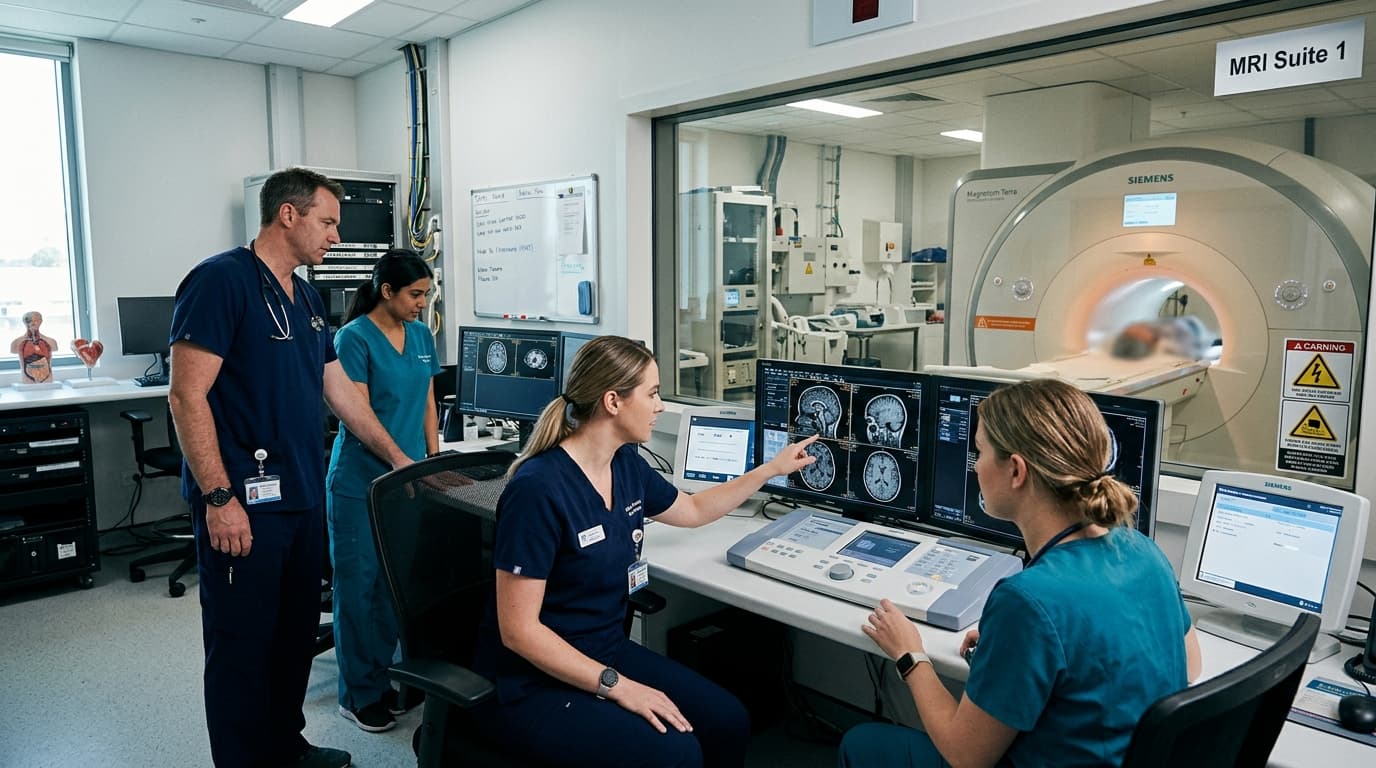
Our MRI tech jobs run across hospitals, outpatient imaging centers and mobile units nationwide, as travel, contract or permanent posts.
Verified openings
Current MRI Technologist Jobs
View all 3 MRI Technologist positions
Filter by shift, contract length, facility setting and state.
The setting changes the work
Where MRI technologists work
The scanner is the same everywhere. Almost nothing else is.
Hospitals
Inpatients, emergency work and sedated or unstable patients. Harder cases, unpredictable schedules, and the setting where most MRI technologist jobs on contract sit.
Outpatient imaging centers
Booked lists, walking patients and a predictable day. Higher volume per shift and far less variation in what comes through the door.
Mobile MRI
A scanner in a trailer, moving between smaller facilities on a fixed route. You work alone more often, and troubleshooting is yours to do.
Specialty and research
Cardiac MRI, neuro protocols, breast imaging and research units. Narrow fields with long learning curves and correspondingly short candidate lists.
ARRT, ARMRIT and cross training
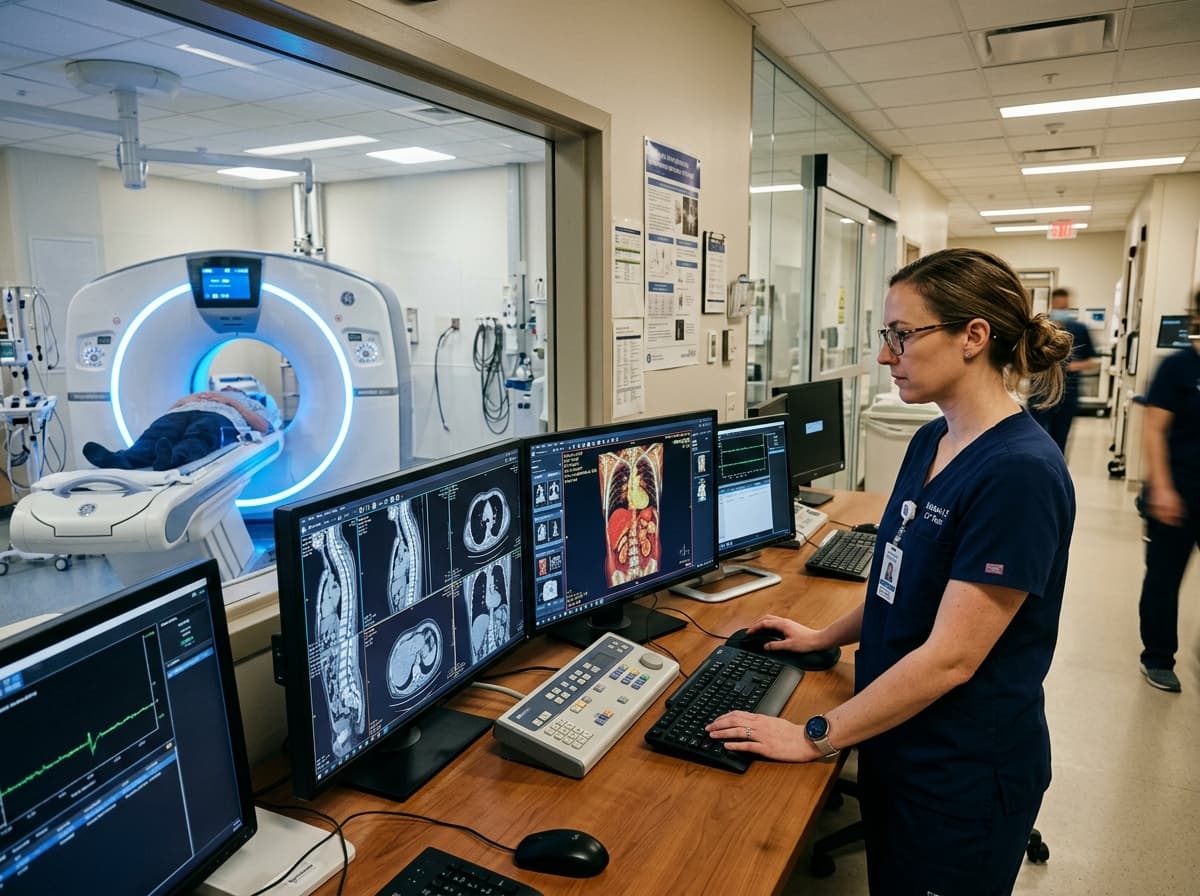
MRI technologist certification runs two ways. Most hold ARRT in radiography first and add MRI as a post primary credential. A smaller number certify directly through the ARMRIT route with no radiography background behind them.
Both are recognized, but not equally by every employer. Some hospitals specify ARRT MRI in the posting and will not look at ARMRIT, and a handful of states set their own licensing rules on top. It is worth knowing which you hold and which a facility will accept before a submission goes out.
Cross trained technologists are in a stronger position than either. A tech who can cover MRI and CT is what most imaging departments actually want, because it solves two rota problems with one person.
Explore CT technologist jobsWhat the numbers say
What MRI technologists earn

Median annual pay for magnetic resonance imaging technologists was 95,480 dollars in May 2025, according to the Bureau of Labor Statistics. The bottom tenth came in under 68,890 dollars, the top tenth above 127,670 dollars. BLS counts MRI under its own occupation code rather than lumping it with radiography, and the MRI figure runs roughly 15,000 dollars ahead of the 80,110 dollars recorded for radiologic technologists and technicians.
That gap is the clearest argument for adding the MRI credential if you are currently working general radiography.
Read those as staff salaries rather than contract rates. Agency work is priced differently, and in imaging the setting swings the figure further than the state line does.
Source: Bureau of Labor Statistics, Occupational Outlook Handbook, Radiologic and MRI Technologists. May 2025 wage data.
How much experience MRI contracts ask for
What matters alongside it is which scanner platforms you have run and which field strengths. A tech who has only worked 1.5T is a different submission from one who has run 3T regularly.
Tell a recruiter the vendor as well. Departments running one manufacturer will usually ask, because protocol naming and workflow differ enough to matter in the first week.

1.5T or 3T.
Tell us what you have run.
Travel, contract and permanent
All three are open. Call is worth settling early in this role, because outpatient centers rarely run it and hospitals often do, and it changes the week considerably.
Nothing here fits?
There are far fewer MRI technologists than there are nurses, and a posting can be gone in a week. Register with us anyway. When a department asks for someone who has run your platform in your state, we want a name already on file.
Call (866) 680-2920 or send your details across.
Choose your next location
MRI technologist jobs by state
Showing 12 of 50 states
- AlabamaSearch jobs
- AlaskaSearch jobs
- ArizonaGuide & jobs
- ArkansasSearch jobs
- CaliforniaSearch jobs
- ColoradoSearch jobs
- ConnecticutSearch jobs
- DelawareSearch jobs
- FloridaSearch jobs
- GeorgiaSearch jobs
- HawaiiSearch jobs
- IdahoSearch jobs
States marked “Guide & jobs” have a dedicated guide for this role. Every other state opens a filtered job search.
Frequently asked questions

What does an MRI technologist do?
An MRI technologist runs magnetic resonance imaging scanners and is responsible for the safety screening that keeps patients and staff out of harm in the magnet room. The job covers positioning, protocol selection, contrast administration where licensed, and image quality before the study reaches a radiologist. It is distinct from a radiologic technologist, who works with x ray based imaging, and from a radiologist, who is the physician reading the images.
Do I need ARRT to work as an MRI tech?
ARRT is the most widely accepted route and the one most employers specify. ARMRIT certification is recognized by many facilities but not all, and some states add their own licensing requirement on top. Check what a specific employer will accept before assuming.
Is cross training in CT worth it?
Cross trained MRI and CT technologists are consistently easier to place than single modality techs. Imaging departments staff both and a tech who covers both solves two rota gaps at once, which usually shows up in the rate as well as in the number of options.
How much experience do MRI contracts ask for?
Facilities count MRI experience from the date you certified, not from the date you started in imaging. Beyond that they want to know the field strengths and the vendor, because those decide how quickly you are useful.
Do MRI technologists earn more than radiologic technologists?
MRI technologists earn more than radiologic technologists at the national median. The Bureau of Labor Statistics put MRI at 95,480 dollars and radiologic technologists and technicians at 80,110 dollars in May 2025, a difference of roughly 15,000 dollars a year. The gap reflects the safety responsibility, the longer exam times and a smaller pool of certified technologists.
Is mobile MRI different from working in a hospital?
Mobile MRI is a genuinely different job rather than the same job in a different building. You are usually the only technologist on site, the unit moves between facilities on a route, and basic troubleshooting falls to you. Some technologists prefer it for exactly those reasons and others would not take it at any rate.
Talk to an imaging recruiter
Three things start a useful conversation: how you certified, what you have scanned on, and where you are free to work. Everything else follows from those.
Housing and the first week of an assignment are covered on the travel nursing page.