

The entry point into imaging
Radiologic Technologist
Jobs
A radiologic technologist produces the images a physician needs to make a diagnosis, positioning the patient, setting the exposure and protecting everyone in the room from unnecessary radiation. It is the largest imaging profession in the country and the entry point into almost every other one.
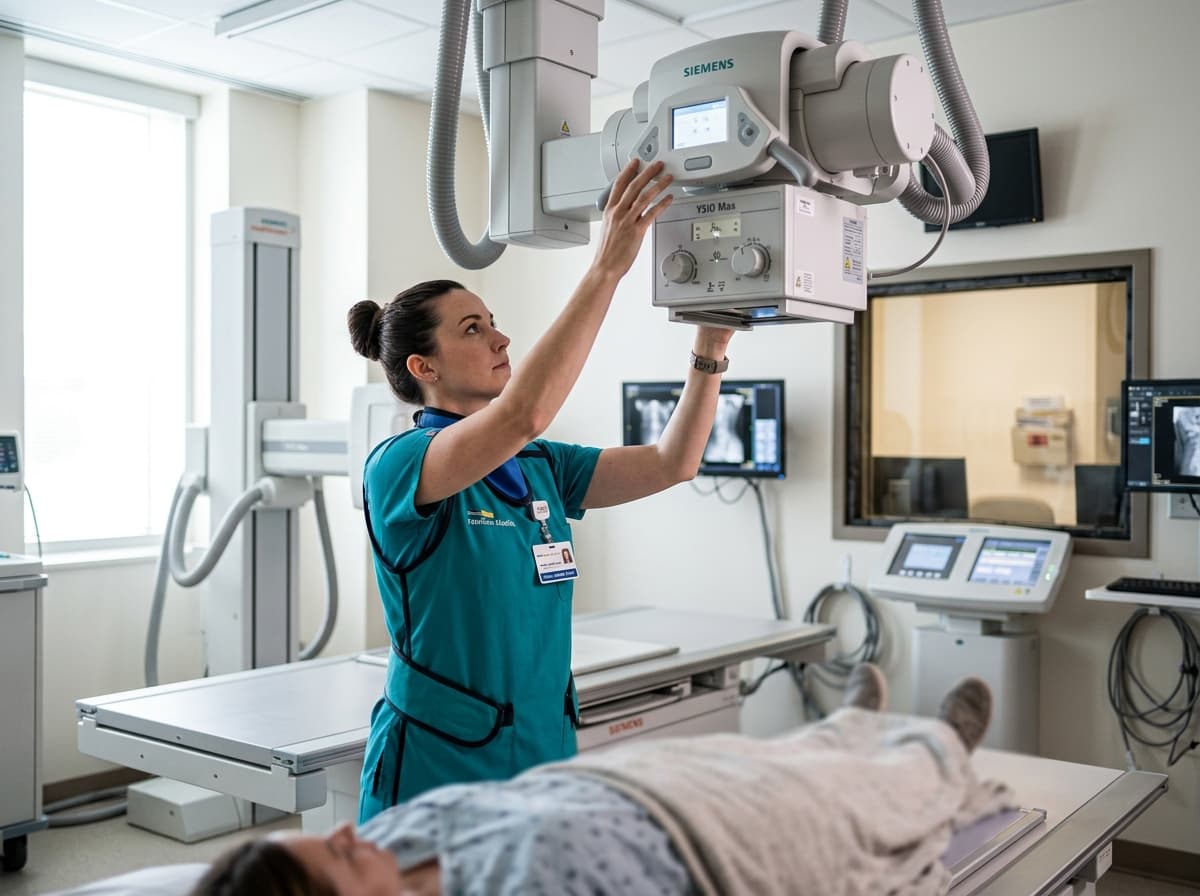
We staff radiologic technologist jobs in hospitals, outpatient imaging centers and urgent care, on travel, contract and permanent terms.
Verified openings
Current Radiologic Technologist Jobs
View all 14 Radiologic Technologist positions
Filter by shift, contract length, facility setting and state.
Rad tech, x ray tech or radiologic technologist?
Radiologic technologist, rad tech, x ray tech, radiographer and radiology technologist are five names for the same registered profession. Which one you search decides what you see.
The registry says radiologic technologist. Colleagues say rad tech jobs. Patients search x ray tech jobs, and so do plenty of hospitals, urgent care sites and smaller clinics. Rad tech positions and radiographic technologist appear on older listings and in health systems that never updated their templates.
Searching one of the five gets you a fraction of what is open. Search at least three.
One registry, many jobs
Types of radiology techs and where they work
The registry is one credential. What a tech actually does varies enormously.
General radiography
Plain film across hospitals, clinics and urgent care. The broadest demand of any imaging modality, and the one that moves most easily between employers.
Computed tomography
A post primary certification added on top of radiography. Cross trained techs who cover both are what most departments actually want.
CT technologist jobsInterventional radiology
Working alongside a physician during catheter based procedures rather than taking images. Longer cases, call rotas, and consistently harder for facilities to fill.
Fluoroscopy and surgical
Barium studies, pain management and C arm work in the operating room. Several states license fluoroscopy separately.

ARRT registration and state licensing
Almost every employer asks for ARRT registration in radiography. On top of that, most states license radiologic technologists separately, and a license in one state does not carry into the next.
No compact exists for imaging, so every state line crossed means another application. Boards move at very different speeds. Apply before you choose the assignment rather than after it, because in this profession the license is what holds up a start date.
A small number of states also issue limited scope permits, which allow x ray work on specific body parts without full ARRT registration. Texas calls it LMRT. Those permits are state specific and do not transfer.
What the numbers say
What radiologic technologists earn

Half of all radiologic technologists and technicians earned more than 80,110 dollars a year in May 2025, and half earned less, on Bureau of Labor Statistics figures. The bottom tenth came in below 55,980 dollars, the top tenth above 118,660 dollars. Counting radiologic and MRI technologists together, BLS recorded 278,100 jobs in 2025 and forecasts around 5 percent growth through 2035.
Adding a modality moves that figure. BLS records magnetic resonance imaging technologists separately at a 95,480 dollar median, roughly 15,000 dollars above general radiography, which is the clearest case for a post primary credential.
Agency work does not follow those numbers. Contract rates are built from a different base, and for a radiographer the modalities on your registration shift the figure more than the location does.
Source: Bureau of Labor Statistics, Occupational Outlook Handbook, Radiologic and MRI Technologists. May 2025 wage data.
How much experience rad tech contracts ask for
Beyond that, facilities want to know which modalities you are credentialed in and which equipment you have run, because a department short on CT cover is not looking for a general radiographer.

Your modalities.
The right opportunity.
Travel, contract and permanent
All three are open. Contract work is common in this role because imaging departments flex with volume, and a lot of techs build a week from shifts at two or three sites.
Nothing here fits?
A lot of imaging work never reaches a job board. Departments call us, we call the bench, and the post is covered inside a week. Get on the bench.
Call (866) 680-2920 or send your details over.
Choose your next location
Radiologic technologist jobs by state
Showing 12 of 50 states
- AlabamaSearch jobs
- AlaskaSearch jobs
- ArizonaSearch jobs
- ArkansasSearch jobs
- CaliforniaSearch jobs
- ColoradoSearch jobs
- ConnecticutSearch jobs
- DelawareSearch jobs
- FloridaSearch jobs
- GeorgiaSearch jobs
- HawaiiSearch jobs
- IdahoSearch jobs
States marked “Guide & jobs” have a dedicated guide for this role. Every other state opens a filtered job search.
Frequently asked questions

What does a radiologic technologist do?
A radiologic technologist makes the diagnostic images a physician reads, working with x ray based equipment. The job covers patient positioning, exposure settings and radiation protection for everyone in the room. Two roles get confused with it: a radiologist is the doctor who interprets the images, and a radiation therapist delivers treatment rather than producing pictures.
Is an x ray tech the same as a radiologic technologist?
X ray tech and radiologic technologist are the same job under different names. Radiologic technologist is the formal registry title, x ray tech is the everyday term used by patients and many employers, and rad tech is what the profession calls itself. Job boards use all three inconsistently, so search more than one.
Do I need a separate license for each state?
A separate state license is required in most of the country, because there is no interstate compact for imaging. ARRT registration is national and travels with you. The state license does not, so every move means a fresh application, and board processing times vary enough that the license rather than the contract usually decides your start date.
Is it worth adding CT or MRI?
Adding a post primary modality widens the list of contracts open to you and raises the rate. Departments prefer cross trained technologists because one person covers two rota gaps. The pay data backs it up. BLS records MRI technologists at a 95,480 dollar median against 80,110 dollars for radiologic technologists.
What do radiologic technologists earn?
Pay runs from about 55,980 dollars at the bottom tenth to more than 118,660 dollars at the top tenth, with the national median at 80,110 dollars. Those are Bureau of Labor Statistics figures for May 2025 and they describe permanent employment. What sits on your ARRT registration drives the number further than which state you pick.
Talk to an imaging recruiter
Send us three things: your modalities, your state licenses and your notice period. A radiographer career widens one credential at a time, and we work from wherever you are now rather than where you plan to be.
What a travel assignment actually covers is on the travel nursing page.