Actively hiring
Ultrasound Technologist / Sonographer
Blackfoot, ID
Allied Health
ContractDay (3x12)13 Wks

The picture is made by the probe
An ultrasound technologist, formally a diagnostic medical sonographer, uses high frequency sound to produce images of organs, blood flow and developing pregnancies, and decides in real time which views a physician will need. Unlike most imaging, the pictures are made by the person holding the probe rather than by the machine.
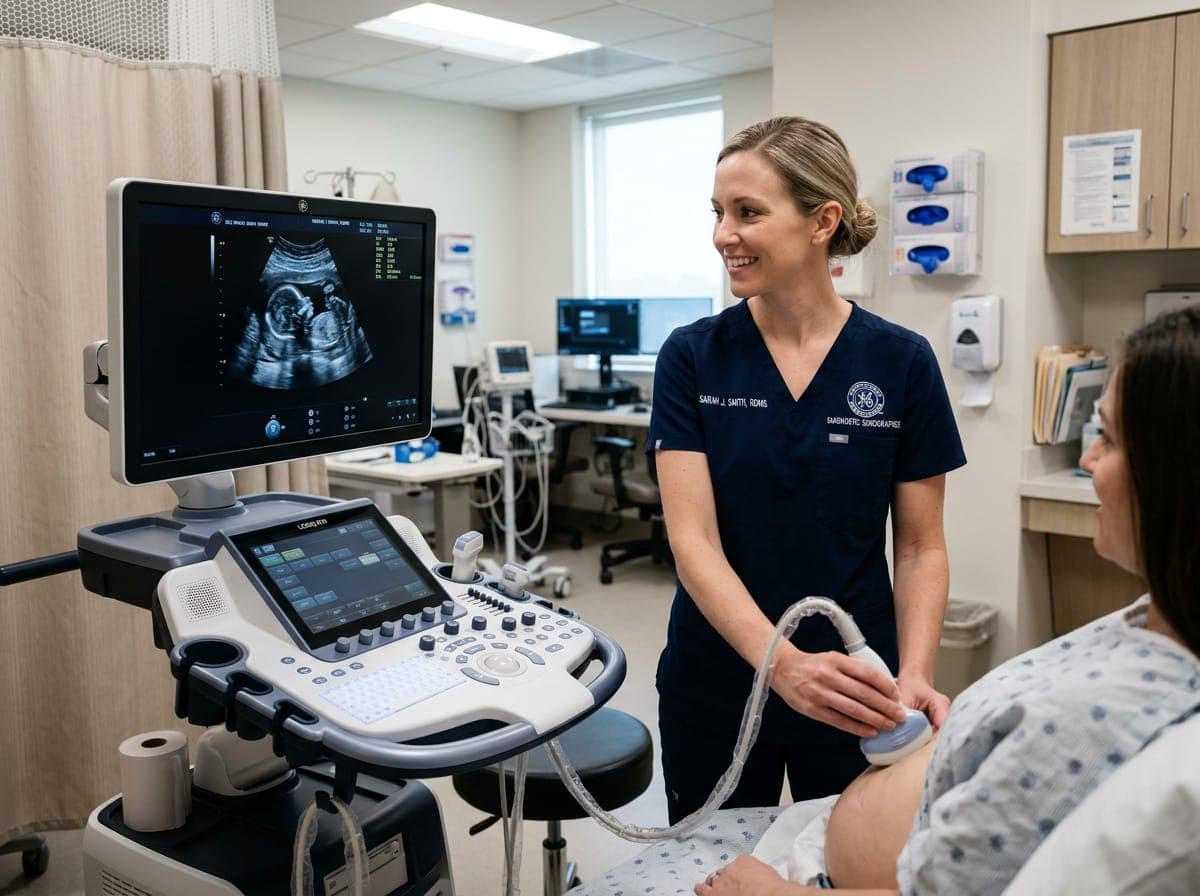
We staff sonographers into hospitals, outpatient imaging centers, OB practices and mobile units nationwide, on travel, contract and permanent terms.
Verified openings
Blackfoot, ID
Allied Health
Carbondale, IL
Allied Health
Sidney, MT
Allied Health
St Johnsbury, VT
Allied Health
Filter by shift, contract length, facility setting and state.
Diagnostic medical sonographer is the formal title, and everything else is shorthand for the same job. Ultrasound tech jobs and ultrasound technician are what most people type. Sonographer jobs is what the profession and the credentialing bodies use. Medical sonographer, ultrasonographer, sonography technologist and sonogram tech all turn up on listings.
The formal title is worth knowing because registries, state boards and hospital job requisitions tend to use it while job boards do not. Searching only the shorthand misses a large share of postings.
Split by body system
Ultrasound splits by body system more sharply than any other imaging profession, and each split has its own credential.
Abdomen, small parts, thyroid and renal. The bread and butter of most departments, and the credential that opens the longest list of contracts.
Pregnancy dating, anatomy scans and gynecologic imaging. Often its own department, and often its own hiring cycle.
Carotid, venous and arterial studies. A separate registry credential and a narrower but consistently short staffed market.
Echocardiography has its own credential, its own departments and its own job market. Close enough to a separate profession that it gets its own page rather than a line here.
Most employers ask for ARDMS certification, and the RDMS credential in a relevant specialty is what a hospital requisition usually names. Cardiovascular Credentialing International is the other recognized route and is more common on the cardiac side.
Unlike radiography, only a small number of states license sonographers, so in most of the country the credential is the requirement rather than a state license. That makes sonography unusually portable, and it is one reason travel work is proportionally larger in this profession than in the rest of imaging.
Adding a second specialty credential is the single most effective way to widen what is open to you.
Source: American Registry for Diagnostic Medical Sonography. Verified September 2026.
What the numbers say

Sonography pays well for a profession you can enter on an associate degree. The Bureau of Labor Statistics recorded a median of roughly 96,590 dollars a year in May 2025, close to 46 dollars an hour, with the bottom tenth under 67,820 dollars and the top tenth above 129,370 dollars. Projected growth is around 14 percent through 2035, well ahead of the average across all occupations.
One thing worth knowing about those numbers. BLS counts cardiac, vascular, abdominal, obstetric and pediatric sonographers together under one occupation, so the median covers all of them. Cardiovascular technologists and technicians are a separate and considerably lower paid category, which is a different job from a registered cardiac sonographer.
Read that as permanent employment. Contract sonography is priced on another basis entirely, and which registry you hold swings it further than where you work does.
Source: Bureau of Labor Statistics, Occupational Outlook Handbook, Diagnostic Medical Sonographers and Cardiovascular Technologists and Technicians. May 2025 wage data.
Sonography skill sits in the hands and does not transfer neatly, so a lab short on vascular studies will not count an abdominal background towards it.
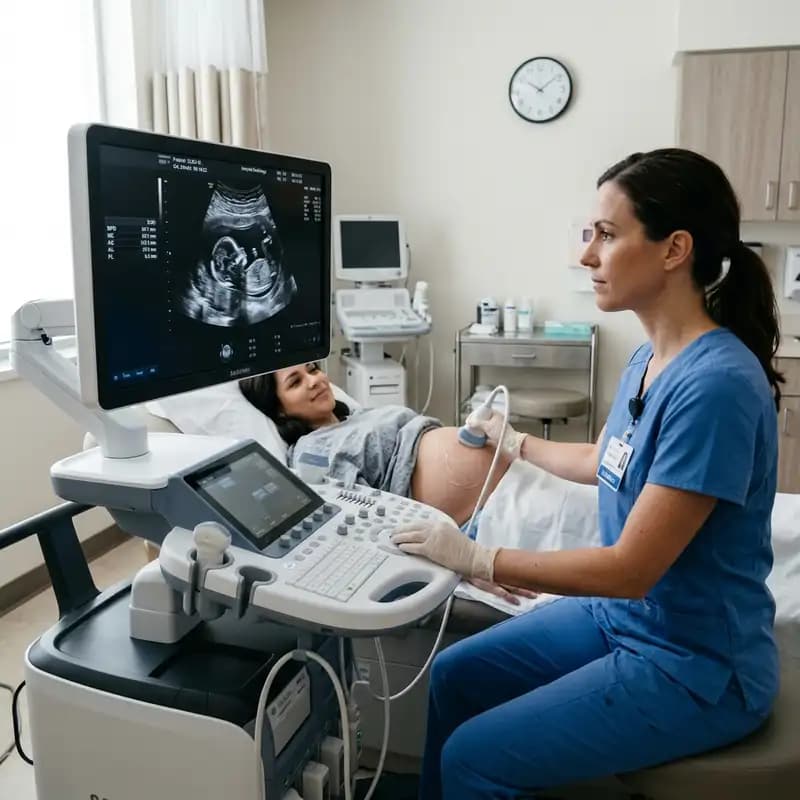
Specialty experience.
The right opportunity.
All three are open, and travel is proportionally larger in sonography than in the rest of imaging because the credential travels where a state license would not.
There are fewer sonographers than there are rad techs, and a decent post rarely sits open. Get on the bench so we can call you first. Tell us your registries and your body systems, or send your details over.
Call (866) 680-2920 or send your details over.
Choose your next location
Showing 12 of 50 states
States marked “Guide & jobs” have a dedicated guide for this role. Every other state opens a filtered job search.

An ultrasound technologist produces diagnostic images using high frequency sound waves, and interprets what is on the screen well enough to know which views a physician needs before the patient leaves. The formal title is diagnostic medical sonographer. The role differs from most imaging in that image quality depends almost entirely on the operator rather than on the equipment.
Sonographer and ultrasound tech are the same job. Diagnostic medical sonographer is the formal title used by registries and hospital requisitions, sonographer is what the profession uses, and ultrasound tech is the everyday shorthand. Job boards use all three, so searching one term misses postings under the others.
A state license is not required in most of the United States for sonographers, which is unusual among imaging professions. Only a small number of states license the role at all, and everywhere else the ARDMS credential is what an employer verifies. That portability is a large part of why travel work is proportionally bigger in sonography than in radiography.
Moving between sonography specialties means earning another registry credential rather than simply applying. Scanning skill is body system specific, so abdominal experience does not open vascular posts and neither opens cardiac. Adding a second credential widens the list of open contracts faster than another year of experience does.
Most sonographers land somewhere between 67,820 and 129,370 dollars, with about 96,590 dollars sitting at the middle of that spread. Those are May 2025 Bureau of Labor Statistics figures for permanent posts. Contract sonography works on a separate basis entirely, and the credentials on your registry card do more to the number than geography does.
Three things get us started: your registries, the body systems you scan, and your notice period. An ultrasound tech career grows one credential at a time and there is no wrong place to be on that path.
How a travel assignment is structured sits on the travel nursing page.