
Travel Healthcare Jobs in Colorado: RN, Surgical Tech & Respiratory Therapist Pay Guide
Colorado has quietly become one of the most popular travel healthcare destinations in the country, and the appeal is easy to understand: a growing population, a strong hospital network along the Front Range, and 300 days of sunshine with the Rockies in your backyard. For travelers, it also has one practical advantage that bigger-paying states don't: for registered nurses, getting licensed is dramatically simpler than in California or Hawaii.

We Care Staffing
This guide covers travel healthcare jobs in Colorado across three of the most in-demand roles: registered nurses, surgical technologists, and respiratory therapists. You'll get real pay data from the Bureau of Labor Statistics, the licensing requirements that differ sharply by profession, and an honest look at what your money is actually worth once Colorado's cost of living is factored in.
Is Colorado a Good State for Travel Healthcare?
Yes, but for accessibility and lifestyle rather than maximum pay. Here's the honest framing that most agency content skips: Colorado wages for these three professions sit close to national averages, not at the premium levels you'd find in California. What Colorado offers instead is a combination that's genuinely hard to find elsewhere.
For RNs, Colorado is a Nurse Licensure Compact (NLC) state, which means a multistate compact license lets you work there without a separate application. Compare that to California or Hawaii, where a state-specific license can take two to four months and routinely costs nurses their start dates. That single difference makes Colorado one of the fastest markets in the country to enter.
Add a large concentration of hospitals in Denver, Colorado Springs, Boulder, and Fort Collins, a steady stream of orthopedic and sports-medicine volume driven by an active population, and an outdoor lifestyle that travelers actively seek out, and Colorado becomes a strong contract choice for clinicians who value access and quality of life. If you're comparing markets, our travel nursing program overview explains how assignments and pay packages are structured.
How Travel Healthcare Pay Works
Before the numbers, a quick clarification that makes every figure below easier to read.
Permanent staff salaries and travel contract pay are two different things. Staff pay is an annual salary. Travel pay is a weekly package that combines a taxable hourly base wage with tax-free stipends for housing and meals, and the number that matters for comparison is your blended rate, meaning total weekly compensation divided by hours worked.
The BLS figures in this guide reflect what permanent staff clinicians earn in Colorado. They're the most reliable baseline available and the right way to judge whether a market pays well, but a travel contract in the same market typically pays more per hour once stipends are included. Use the BLS data to understand the market, and your blended rate to compare specific offers.
One more note on reading the numbers: BLS publishes both a mean (simple average) and a median (midpoint), while salary websites publish self-reported averages that vary by who responded. That's why you'll see different figures for the same job across the web. The BLS data below is the authoritative baseline.
Registered Nurse (RN) Pay in Colorado
What Colorado RNs earn
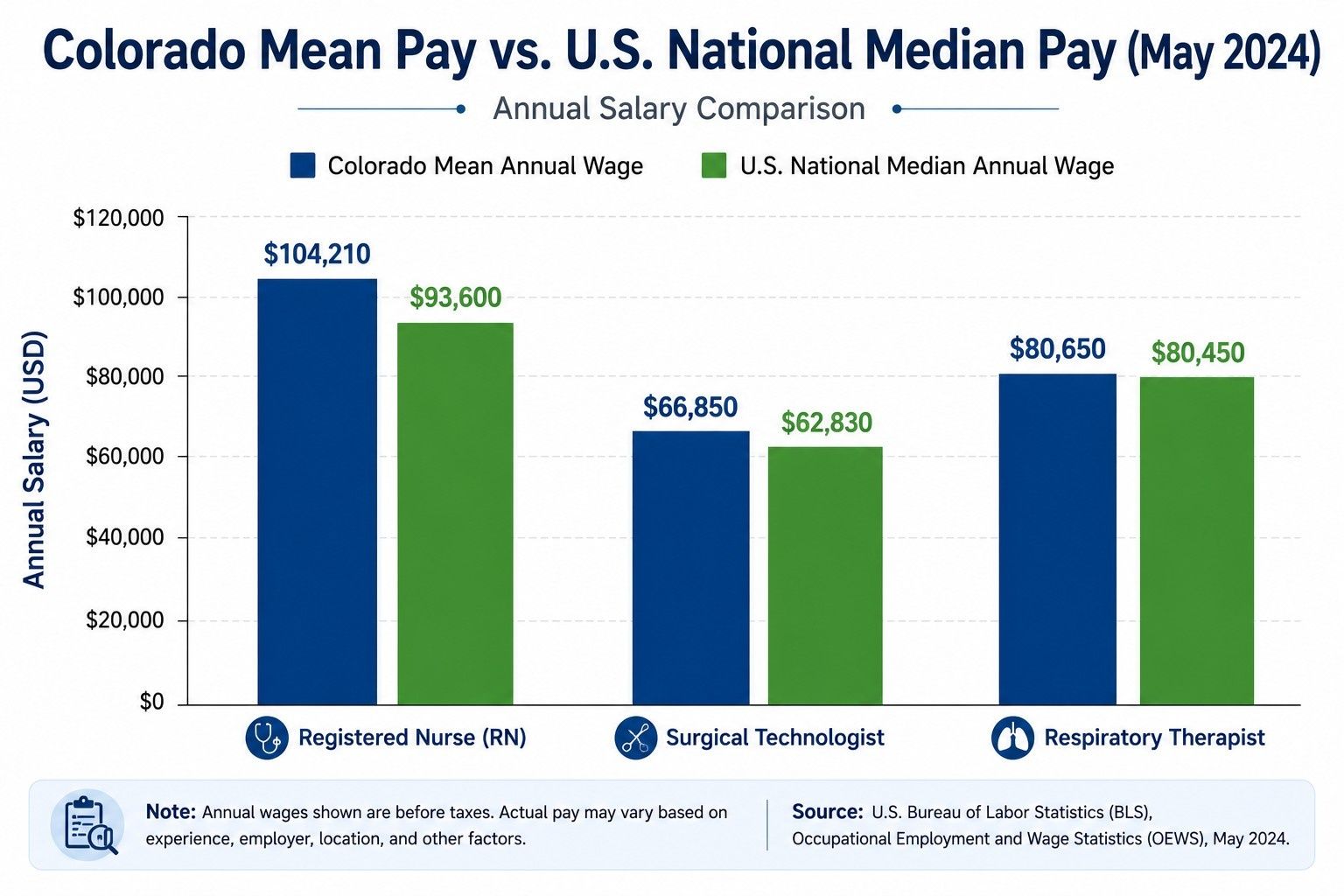
Based on BLS Occupational Employment and Wage Statistics (May 2024 data), registered nurses in Colorado earn:
- Average (mean) annual wage: about $91,730
- Median annual wage: about $86,900, roughly $41.78 an hour
- Typical range: from about $70,790 at the 10th percentile to $112,800 at the 90th
- Employment: roughly 53,480 registered nurses statewide
For national context, the BLS median RN wage was $93,600 in May 2024. That means Colorado RN pay sits slightly below the national median, which is worth knowing honestly rather than discovering after you've signed. Colorado is not a top-paying nursing state, and any guide claiming otherwise isn't looking at the data.
Why nurses choose Colorado anyway
The compact license is the headline advantage. Because Colorado participates in the NLC, an RN holding a multistate license from another compact state can begin working without a separate state application. For a traveler, eliminating a two-to-four-month licensing wait is often worth more than a modest pay difference, especially when you're trying to line up back-to-back contracts.
Demand is also broad. Major employers include UCHealth, HealthONE, SCL Health/Intermountain, Denver Health, Children's Hospital Colorado, and Kaiser Permanente, with steady needs across ICU, ER, med-surg, OR, and labor and delivery. You can browse current Colorado RN assignments here.
Pay across Colorado metros
Pay varies across the state, with Boulder and the Denver metro generally at the higher end and areas like Greeley and Pueblo lower. Metro-level figures differ noticeably between data sources and survey years, so treat city comparisons as directional rather than precise, and always verify a specific offer against current listings.
Surgical Technologist Pay in Colorado

What Colorado surgical techs earn
Surgical technologist pay is lower than RN pay nationally, but the role has strong, steady demand and a much shorter education path. Current BLS figures:
- National median (May 2024): $62,830 a year for surgical technologists
- National mean: roughly $65,810, about $31.64 an hour
- Colorado average: approximately $65,500 a year, near $31.50 an hour, placing Colorado modestly above the national median
- Job outlook: 5% growth projected from 2024 to 2034, with about 8,700 openings a year nationally across surgical assistants and technologists
Real Colorado hospital postings illustrate the range in practice. Children's Hospital Colorado, for example, has advertised surgical technician hourly ranges from roughly $24.72 to $37.08, depending on experience.
Travel surgical tech pay in Colorado
Travel contracts pay meaningfully more than staff rates once stipends are included. Colorado travel surgical tech contracts commonly run around $2,000 per week, with stronger contracts reaching approximately $2,400 per week on a 12x3 schedule, which sits comfortably above the typical national travel range for the role.
Orthopedics is a particular strength in Colorado, driven by a year-round active population and an aging demographic needing joint replacements, alongside general surgery, OB, and a fast-growing outpatient surgery center sector. Explore current Colorado surgical technologist jobs here.
The Colorado registration requirement
This is the detail that catches surgical techs off guard, so plan for it. Colorado is one of only a few states that require surgical technologists to register with the state, through the Department of Regulatory Agencies (DORA), in addition to the CST certification from the NBSTSA that most facilities expect.
The good news: registration is a much lighter lift than a full professional license, so it shouldn't slow you down if you handle it early. But it is a real requirement, and discovering it at the offer stage is a preventable problem. Confirm current registration steps with DORA and your recruiter, since details are updated periodically.
Respiratory Therapist Pay in Colorado
What Colorado respiratory therapists earn
Based on BLS OEWS data (2024), respiratory therapists in Colorado earn:
- Average (mean) annual wage: about $80,270
- Median annual wage: about $80,770
- Typical range: from about $65,680 at the 10th percentile to $99,190 at the 90th
- Middle 50%: roughly $68,060 to $86,060
The national median for respiratory therapists was about $80,450 in May 2024, so Colorado sits essentially level with the national figure. That's a fair, mid-market wage rather than a premium one, and notably below California, which leads the country at roughly $102,000.
Demand is the real story
Where respiratory therapy stands out is growth. The BLS projects 12% employment growth from 2024 to 2034, much faster than the average for all occupations, with about 8,800 openings each year nationally. That growth is driven by an aging population, rising rates of COPD and asthma, and expanding outpatient and home-based care.
Colorado's altitude adds a genuine clinical dimension here. Denver sits at 5,280 feet, and higher-elevation communities go considerably above that, which means respiratory therapists in Colorado routinely manage altitude-related presentations and chronic respiratory conditions that behave differently than they do at sea level. For many RTs, that's meaningful clinical experience rather than just a talking point. Browse current Colorado respiratory therapist openings here.
Licensing for respiratory therapists
Respiratory therapists must hold a Colorado license issued through DORA's Division of Professions and Occupations. You'll generally need to have completed an accredited program and hold your NBRC credential, with the RRT preferred by most employers. As with surgical tech registration, start the process early rather than at offer stage.
Licensing at a Glance: Three Very Different Paths
One of the most practical things to understand about Colorado is that licensing difficulty varies enormously by profession.
The RN compact advantage is the single biggest structural reason Colorado is an easy market to enter. For allied roles, the requirements are manageable but real, and the mistake is treating them as an afterthought. If you'd like help sequencing licensing with a contract start date, contact our team early, and you can also explore our broader allied health staffing services.
Cost of Living: What Colorado Pay Is Really Worth
This is where an honest guide earns its keep. Colorado's cost of living runs above the national average, driven primarily by housing along the Front Range. Denver and Boulder in particular have seen substantial housing cost increases, and Boulder is among the more expensive markets in the state.
Put that next to the pay data and the picture is clear: Colorado pays roughly national-average wages in a somewhat above-average cost market. That doesn't make it a bad choice, but it does mean the lifestyle and licensing accessibility are the real draws, not the paycheck. Practical implications for travelers:
- Compare offers on what's left after housing, not on gross weekly pay.
- Consider markets outside Denver and Boulder. Colorado Springs, Pueblo, Grand Junction, and Fort Collins often stretch a stipend considerably further.
- Know your GSA per diem caps, since tax-free housing stipends are limited by federal per diem rates for the assignment's county.
- Protect your tax home. Stipends are only tax-free if you maintain a legitimate permanent residence and the assignment is genuinely temporary under IRS rules.
Where the Jobs Are in Colorado
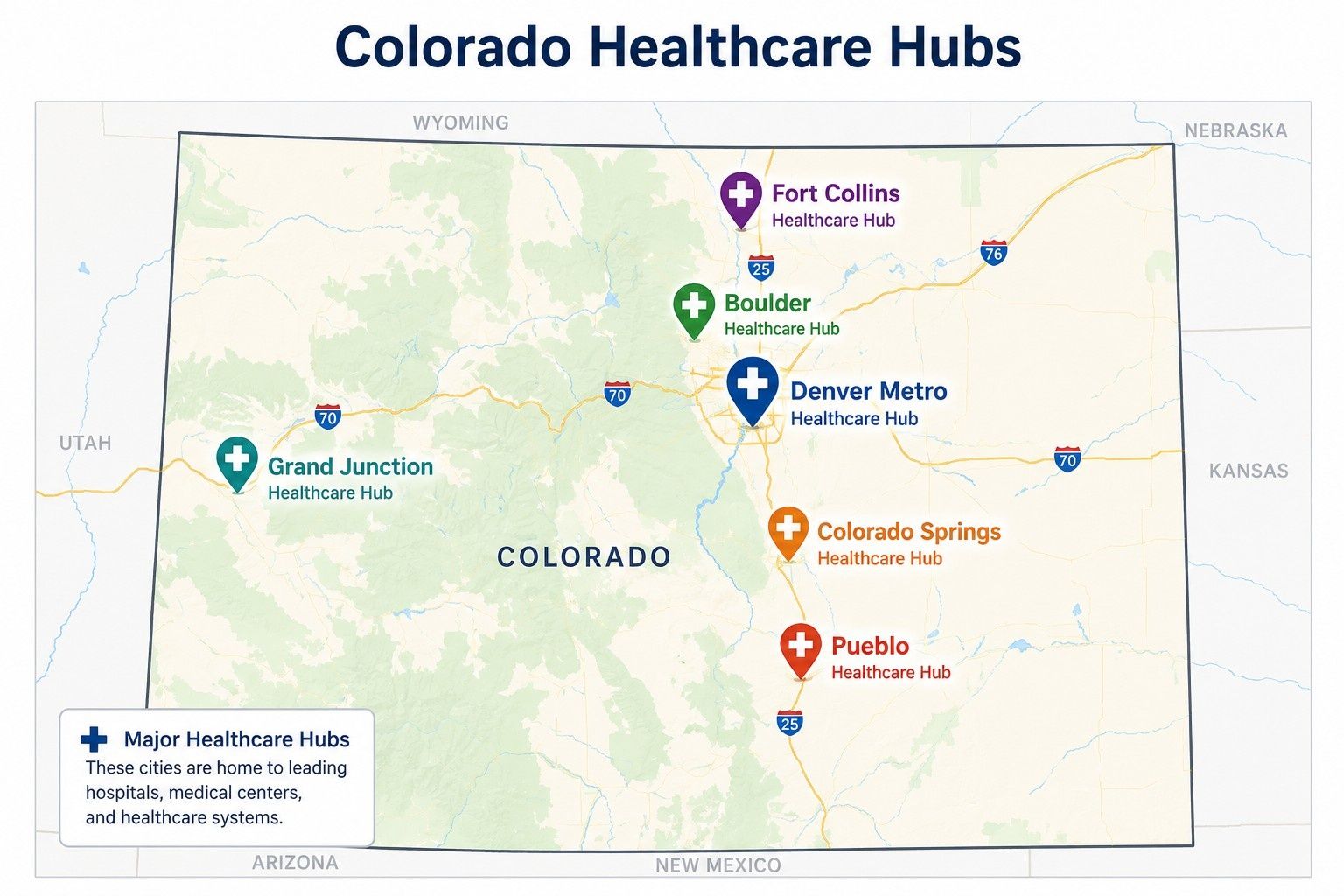
The bulk of Colorado's travel assignments cluster along the Front Range corridor:
- Denver metro: the largest concentration of hospitals and the widest specialty mix, anchored by UCHealth, HealthONE, Denver Health, and Children's Hospital Colorado.
- Colorado Springs: a large secondary market with steady demand and lower housing costs than Denver.
- Boulder and Fort Collins: smaller markets, strong quality of life, higher housing costs in Boulder.
- Pueblo, Grand Junction, and mountain communities: fewer openings, but rural and resort-area facilities sometimes pay competitively for hard-to-fill roles and offer the best cost-of-living math in the state.
Travelers willing to work outside the Denver metro often find both better housing value and less competition for contracts.
How to Maximize a Colorado Travel Contract
- Use the compact advantage if you're an RN. It's the fastest way into the state, so line up contracts accordingly.
- Handle DORA registration or licensing early if you're a surgical tech or respiratory therapist. It's manageable, but only if it isn't last-minute.
- Compare blended rates, not headline weekly pay. Divide total compensation by hours to judge offers fairly.
- Look beyond Denver. Secondary markets frequently net more after housing.
- Target high-demand specialties. ICU, ER, and OR for nurses; orthopedics and outpatient surgery for techs; critical care for RTs.
- Protect your tax home so your stipends stay tax-free, and consult a tax professional about your specific situation.
Conclusion
Colorado is one of the most accessible and livable travel healthcare markets in the country, but it rewards clinicians who go in with accurate expectations. RN pay sits slightly below the national median, respiratory therapists earn close to the national figure, and surgical techs land modestly above it, all in a state where the cost of living runs above average. What Colorado offers in exchange is real: compact licensure for nurses, manageable requirements for allied roles, a deep Front Range hospital network, and a quality of life that keeps travelers coming back for repeat contracts.
Ready to find your Colorado assignment? Compare current openings for RNs, surgical technologists, and respiratory therapists, and get your licensing or registration started early so you're ready when the right contract opens
References & Sources
All data points are drawn from the following publicly available sources (accessed June 2026). BLS and Colorado DORA are the authoritative baselines; agency and job-board figures vary by methodology.
- U.S. Bureau of Labor Statistics — Registered Nurses, Occupational Outlook Handbook (national median $93,600, May 2024; 5% growth 2024–34; ~189,100 annual openings): https://www.bls.gov/ooh/healthcare/registered-nurses.htm
- U.S. Bureau of Labor Statistics — Surgical Assistants and Technologists, OOH (surgical technologist median $62,830, May 2024; 5% growth; ~8,700 annual openings): https://www.bls.gov/ooh/healthcare/surgical-technologists.htm
- U.S. Bureau of Labor Statistics — Respiratory Therapists, OOH (national median ~$80,450, May 2024; 12% growth 2024–34; ~8,800 annual openings): https://www.bls.gov/ooh/healthcare/respiratory-therapists.htm
- BLS OEWS Colorado data — Registered Nurses (state mean $91,730; percentiles; ~53,480 employed): https://americabynumbers.com/salary/registered-nurses-salary-in-colorado/
- BLS OEWS Colorado data — Respiratory Therapists (state mean $80,270; median $80,770; percentiles): https://americabynumbers.com/salary/respiratory-therapists-salary-in-colorado/
- Colorado Department of Labor and Employment — Colorado Occupational Employment and Wages, 2024: https://cdle.colorado.gov/press-releases/press-release-colorado-occupational-employment-and-wages-2024
- Colorado DORA — Surgical Assistant and Surgical Technologist Registration: https://dpo.colorado.gov/SurgAssistTech
- Nurse Licensure Compact (NLC) — participating states: https://www.nursecompact.com
- GSA Per Diem Rates (housing/meal stipend caps by county): https://www.gsa.gov/travel/plan-book/per-diem-rates
- IRS Publication 463 — Tax Home and Travel Expense Rules: https://www.irs.gov/publications/p463
Questions
Frequently asked
Looking for your next assignment?
Browse current travel contracts, or tell a recruiter what you are after and we will match you against roles before they are listed.