

Travel Nursing in Alaska: Pay, Remote Assignments & What to Expect
Alaska is the assignment nurses either dream about or dismiss, and usually because they don't have the full picture. The Last Frontier pays well, consistently ranking among the highest-paying states for travel nurses, and it offers experiences you can't get anywhere else: high-autonomy rural practice, tight-knit small hospitals, and scenery that makes a 13-week contract feel like an expedition. But it also asks more of you than most assignments, from a demanding licensing process to genuine remoteness.

We Care Staffing
This guide gives you the honest, in-depth picture of travel nursing in Alaska in 2026: what you'll really earn, what remote and bush assignments are actually like, how to get licensed, and what to expect day to day. If a northern adventure appeals to you, you can explore current Alaska RN openings with We Care Staffing as you read.
Why Nurses Choose Alaska
Alaska stands out for a rare combination of strong pay and extraordinary experience. It regularly lands among the top five highest-paying states for travel nurses, and unlike some high-pay markets, much of that demand comes from genuine, structural need: a small population spread across an enormous, often roadless geography, with facilities that must be staffed regardless of how hard they are to reach.
For the right nurse, that need translates into opportunity: premium pay, broad clinical autonomy, and the kind of adventure that draws people to nursing's frontier in the first place. For the wrong fit, the isolation and intensity can be a lot. The goal of this guide is to help you tell which one you are before you sign. If you're comparing Alaska against other markets, our travel nursing program overview explains how assignments and pay packages work.
Travel Nurse Pay in Alaska (2026)
How Alaska travel pay is structured
Like all travel contracts, Alaska pay combines a taxable hourly base wage with tax-free stipends for housing and meals. The figure that matters for comparing offers is your blended rate, meaning total weekly compensation divided by hours worked.
What you can realistically earn
Across major job boards in 2026, the average travel nurse in Alaska earns roughly $2,400 to $2,550 per week, which runs about 8 to 15 percent above the national travel-nurse average. Individual contracts range widely, from around $1,800 to $3,800 or more per week, depending on specialty, city, and acuity. Blended rates commonly land near $55 an hour or higher.
Some of the strongest pay is in the most remote communities, where staffing is hardest. Reported averages in towns like Fairbanks, Sitka, Homer, and Nome frequently run above the Anchorage figure, and the highest-demand specialty contracts can push well beyond $3,000 a week. For context, permanent staff RNs in Alaska already earn well above the national median, so the travel premium sits on top of an already-high base.
One honest note: pay has normalized since the crisis rates of 2021 and 2022, so be skeptical of any 2026 listing promising pandemic-era numbers. And remember that annualized figures assume near-continuous work, which many travelers don't do.
Which specialties and locations pay more
Alaska leans heavily on experienced nurses. Critical care, emergency, and trauma experience is often required, precisely because remote, high-acuity facilities can't rely on backup the way a large urban hospital can. Those specialties, along with the most isolated communities, tend to pay the most. Explore current Alaska RN assignments here.
Remote and Bush Assignments: What They Really Mean
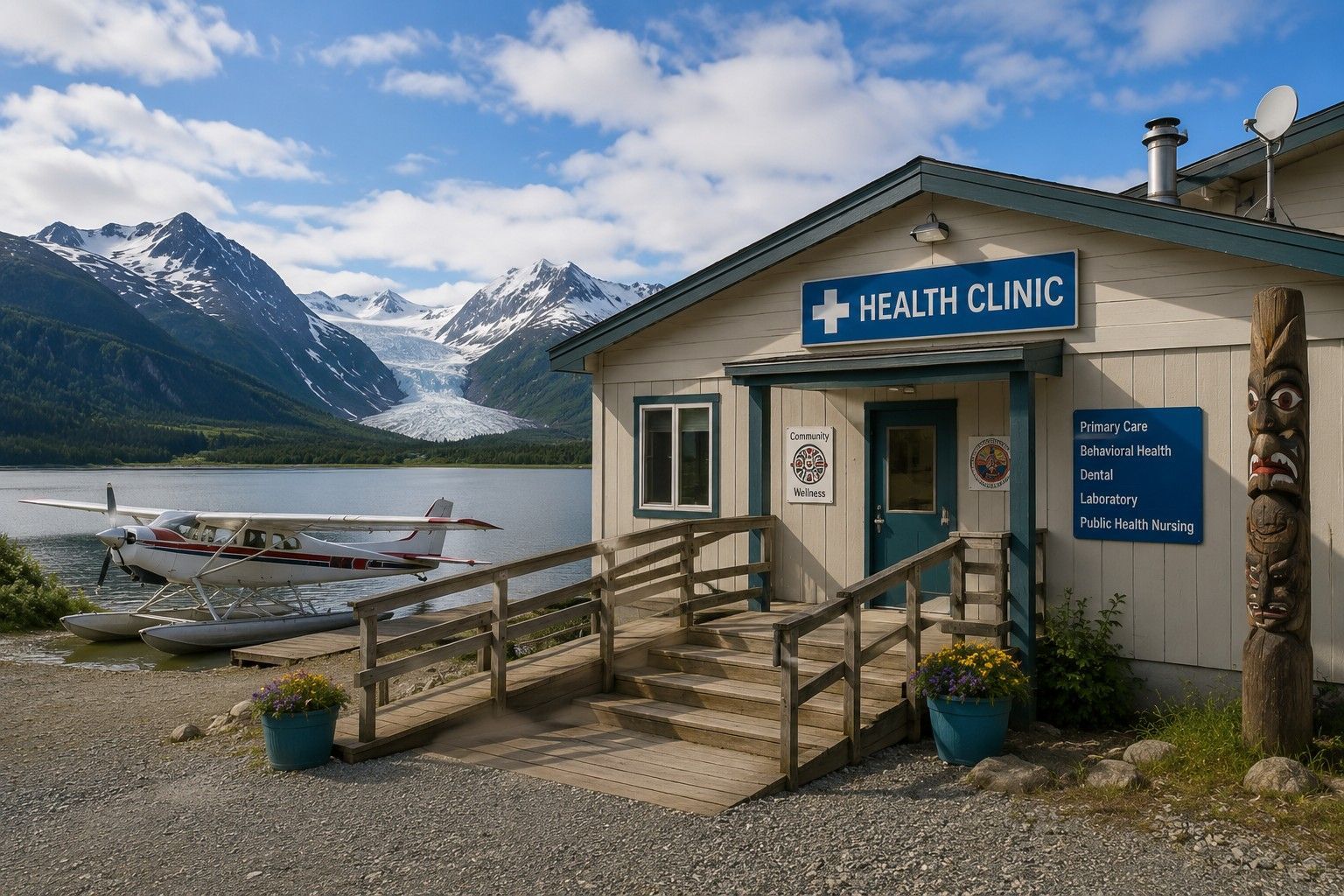
This is what sets Alaska apart from every other travel market. Assignments fall roughly into two categories, and they are very different experiences.
Urban and road-system assignments in Anchorage, Fairbanks, and Juneau look much like travel nursing elsewhere: sizable hospitals, standard specialties, amenities nearby, and reasonable logistics. These are the best entry point for a first Alaska contract.
Remote and "bush" assignments are the real frontier. Many Alaskan communities are off the road system entirely, reachable only by small aircraft or boat. Nurses in rural and tribal health settings often work with significant autonomy, sometimes as one of very few clinicians for a wide area, managing a broad scope with limited on-site backup and long transport times for higher-level care. It's demanding, deeply rewarding work that builds skills fast, but it is not a fit for a nurse who wants a large support team down the hall.
If a remote assignment appeals to you, go in clear-eyed about three things: the professional autonomy is real and requires confidence; the isolation is real and affects daily life; and the logistics, from flights to supplies to weather delays, are part of the job, not an exception to it.
Getting Licensed: Alaska Is Not a Compact State
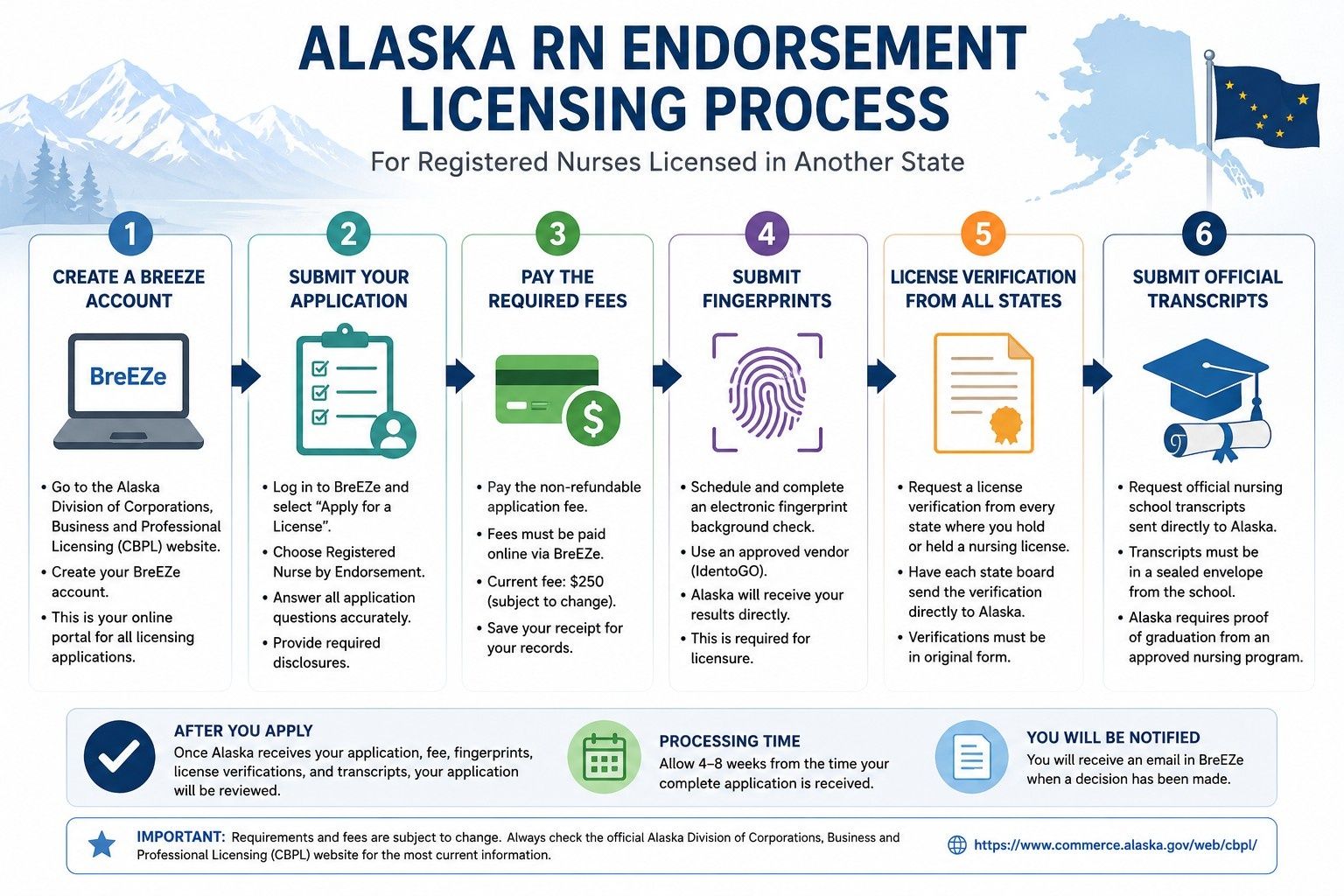
Plan for this early, because it's more involved than many states. Alaska is not a member of the Nurse Licensure Compact, so a multistate compact license does not let you practice there. Every travel nurse needs an Alaska-issued RN license from the Alaska Board of Nursing before starting an assignment. (Legislation to join the compact has been introduced but, as of 2026, has not passed, so confirm current status before you rely on it.)
Key things to know about the Alaska license:
- Licensure by endorsement applies if you already hold an active RN license elsewhere. Apply through the state's online portal, with license verification through Nursys.
- A recent-practice requirement. Endorsement applicants must document a minimum number of recent nursing practice hours (commonly cited as 320 hours within a recent window). If you can't, you may need to meet continuing-competency requirements or complete a refresher course.
- Fingerprinting. You'll complete an FD-258 fingerprint card. Rejected or incorrect fingerprint cards are one of the most common causes of delay, so follow the instructions exactly.
- Fees generally run in the range of a few hundred dollars for initial endorsement; confirm the current amount with the Board.
- Processing time is commonly estimated at about nine to eleven weeks for a complete application, and longer if documents are missing.
- A temporary permit may be available. If your file is complete except for items like employment or English-proficiency verification, Alaska may issue a temporary permit valid up to six months so you can begin working while the full license is finalized. Confirm eligibility with the Board.
- Renewal falls on November 30 of even-numbered years for RNs, with continuing-competency requirements each cycle.
Because the timeline and the recent-practice rule catch people out, start the process as early as possible. A good agency's licensing team can help you sequence verification, fingerprints, and transcripts so nothing stalls; if you'd like that help, reach out to our team early in your planning.
Cost of Living and Taxes
Two financial realities shape what an Alaska contract is actually worth.
First, cost of living is high, especially in remote areas where nearly everything is shipped or flown in. Groceries, fuel, and goods cost more than in the Lower 48, and housing varies enormously between a road-system city and a bush community. Weigh a contract on what's left after real local costs, not just the gross weekly number, and remember that tax-free stipends are capped by federal GSA per diem rates for the assignment's area.
Second, Alaska has no state income tax, which is a genuine advantage. Combined with no state sales tax at the state level (though some municipalities levy local sales taxes), that can meaningfully improve take-home pay compared with high-tax states. As always, tax-free stipends are only tax-free if you maintain a legitimate tax home and the assignment is temporary under IRS rules, so keep your documentation in order and consult a tax professional.
What to Expect Day to Day
Beyond pay and paperwork, a few realities define the Alaska experience:
- Daylight swings are extreme. Summers bring nearly endless daylight; winters bring long darkness. Both affect sleep, mood, and energy, so plan for it.
- Weather runs the schedule. Flights and supply deliveries get delayed, and travel between communities can be weather-dependent. Flexibility isn't optional.
- The clinical scope is broad. Especially in smaller facilities, you'll handle a wider range than you might in a specialized urban unit. That's a fast track to growth for the right nurse.
- Community matters. Small Alaskan towns and tribal health settings are close-knit. Going in as a respectful, adaptable guest, and being genuinely useful, is how you thrive.
- The days off are the payoff. Fishing, hiking, wildlife, glaciers, and the northern lights are right outside. Nurses who love the outdoors often find Alaska the most rewarding assignment of their careers.
How to Make the Most of an Alaska Contract
- Start licensing early. The Alaska timeline and recent-practice requirement are the most common reasons nurses miss start dates.
- Match the assignment to your experience. Start on the road system if you're new to Alaska; consider bush assignments once you're confident in high-autonomy settings.
- Compare blended rates, not headline pay. Divide total weekly compensation by hours to judge offers fairly.
- Budget for real cost of living. Especially in remote areas, factor in shipping-inflated prices.
- Use the no-income-tax advantage. It's a real boost to take-home pay.
- Protect your tax home. Keep documentation so your stipends stay tax-free.
Conclusion
Travel nursing in Alaska is not for everyone, and that's exactly why it pays and rewards so well. The pay ranks among the nation's highest, there's no state income tax, and the experience, from high-autonomy rural practice to world-class scenery, is genuinely one of a kind. In exchange, Alaska asks for strong clinical experience, real adaptability, early licensing, and comfort with remoteness. If that trade sounds like an adventure rather than a burden, few assignments will give you more. When you're ready, browse current Alaska travel nurse assignments and start your Alaska license early so you're ready when the right contract opens.
References & Sources
All data points are drawn from the following publicly available sources (accessed June 2026). The Alaska Board of Nursing, IRS/GSA, and BLS are the authoritative baselines; agency and job-board pay figures vary by methodology.
- Alaska Board of Nursing (Division of Corporations, Business and Professional Licensing) — licensure by endorsement, recent-practice rule, temporary permit, renewal: https://www.commerce.alaska.gov/web/cbpl/professionallicensing/boardofnursing.aspx
- NursingLicensure.org — Alaska Nursing License Requirements (processing times, non-compact status, competency rules): https://www.nursinglicensure.org/state/nursing-license-alaska/
- U.S. General Services Administration — Per Diem Rates (housing/meal stipend caps by area): https://www.gsa.gov/travel/plan-book/per-diem-rates
- IRS — Tax Home and Travel Expense Rules (Publication 463): https://www.irs.gov/publications/p463
- U.S. Bureau of Labor Statistics — Registered Nurses (baseline RN wage and outlook data): https://www.bls.gov/ooh/healthcare/registered-nurses.htm
- Nurse Licensure Compact (NLC) — participating states (confirming Alaska is not a member): https://www.nursecompact.com
Questions
Frequently asked
Looking for your next assignment?
Browse current travel contracts, or tell a recruiter what you are after and we will match you against roles before they are listed.