RN Jobs Outside NYC: Buffalo, Rochester & Long Island Pay Compared
When nurses think about working in New York, they picture Manhattan. But New York City is only one of the state's nursing markets, and for a lot of RNs it isn't the smartest one financially. Once you look past the five boroughs, three very different markets come into focus: Buffalo and Rochester upstate, and Long Island just east of the city. Each pays differently, costs differently to live in, and rewards a different kind of nurse.

We Care Staffing
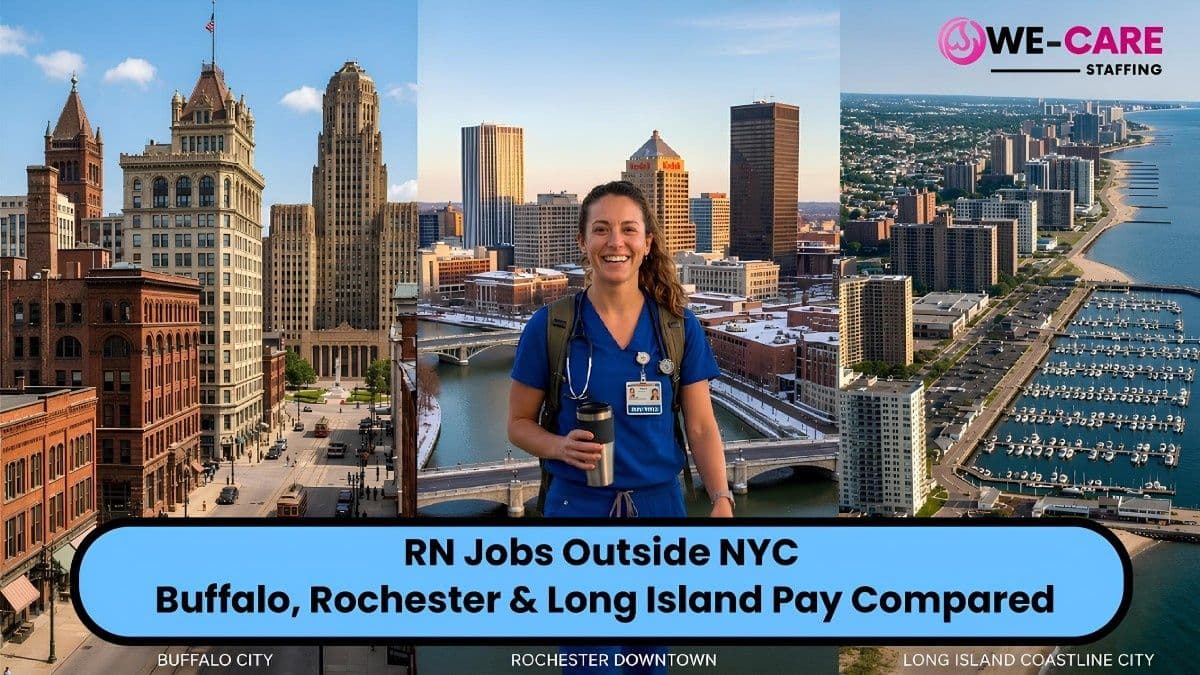
This guide compares RN jobs outside NYC across Buffalo, Rochester, and Long Island, using real Bureau of Labor Statistics data and an honest cost-of-living lens. The headline finding up front: the market with the biggest paycheck is not always the one that leaves you with the most money. If you're weighing options across the state, you can explore current New York RN openings with We Care Staffing alongside this comparison.
The Statewide Baseline
Before comparing regions, here's the anchor. Across New York State, registered nurses earn an average (mean) wage of about $100,130 a year, roughly $48 an hour, with a typical range from about $77,930 at the 10th percentile to $153,420 at the 90th (BLS). For national context, the U.S. median RN wage was $93,600 in May 2024, so New York overall pays above the national norm.
New York is also the fourth-largest RN employment state in the country, with well over 180,000 nurses. After NYC, the largest concentrations of nursing jobs are in Buffalo and Rochester, while Long Island functions as a high-paying market of its own. One more note before we compare: BLS reports a mean and a median, and salary websites report self-reported averages that differ, so treat every figure here as a reliable range rather than a precise promise, and be skeptical of any site quoting New York averages near $150,000, which run far above BLS data.
Long Island: Near-NYC Pay Without the City Tax
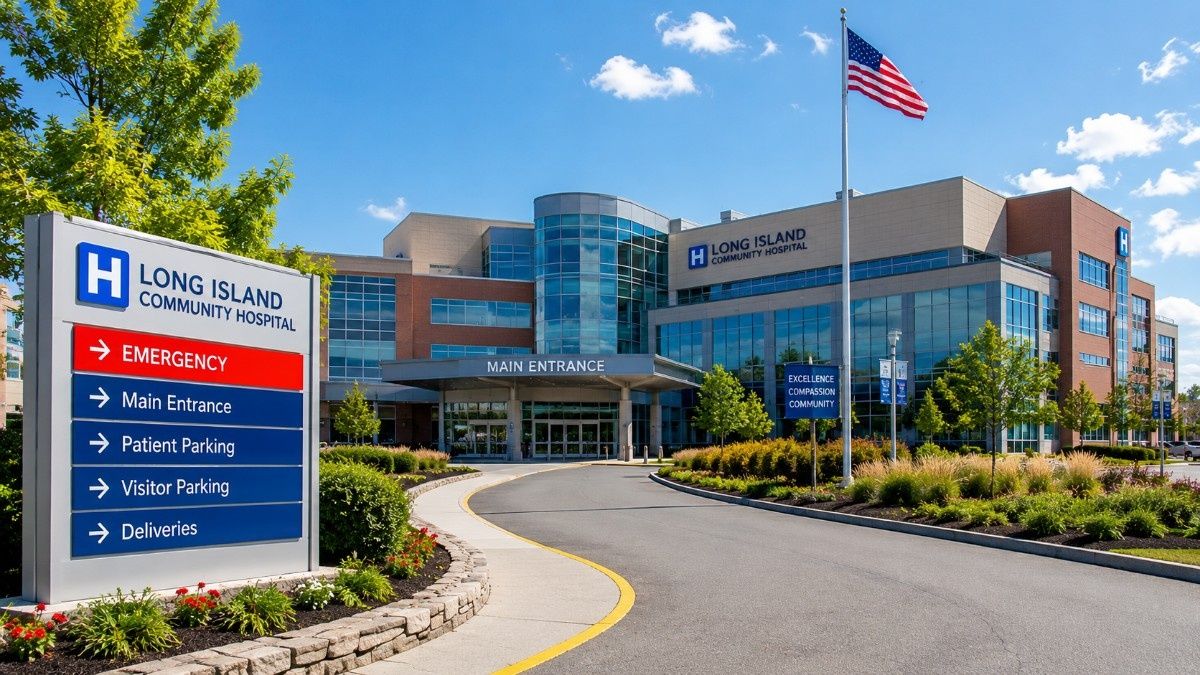
Long Island, meaning Nassau and Suffolk counties, is the highest-paying of the three markets and sits just behind NYC itself. Nurses here earn near-NYC wages, and the region has a genuine financial advantage that even the city can't match: Long Island nurses pay New York State income tax but not New York City income tax, which the five boroughs add on top. For a nurse, avoiding that extra city tax layer meaningfully improves take-home pay.
The employer base is strong. Northwell Health, the largest health system in New York State, is headquartered on Long Island, and Stony Brook University Hospital anchors a solid academic environment. Demand spans hospitals, ambulatory care, home health, and long-term care.
The catch is cost of living. Long Island housing runs well above the national average, and while it's often somewhat more affordable than Manhattan, it is not cheap. Long Island tends to be the best financial position in the greater NYC area, high pay minus the city tax, but it still demands a high-cost-of-living budget. It suits nurses who want strong pay and proximity to the city without paying city taxes, and who can absorb premium suburban housing. Explore current Long Island and New York RN roles here.
Buffalo: Lower Pay, Much Lower Costs

Buffalo, the second-largest RN employment market in the state with roughly 13,000 nurses in the metro, tells the opposite story from Long Island. Nominal RN pay in Buffalo is lower, generally landing in the mid-to-upper $80,000s on average, noticeably below the statewide mean and well below Long Island.
But nominal pay is only half the equation, and in Buffalo the other half is decisive. Housing and overall living costs in the Buffalo area run dramatically lower than downstate, often on the order of 50 to 70 percent cheaper than NYC-area housing. That flips the math: a Buffalo nurse earning in the $80,000s can frequently afford to own a home, save consistently, and build a level of financial stability that a higher nominal salary downstate struggles to match.
Buffalo also has real clinical depth. Roswell Park Comprehensive Cancer Center is a nationally recognized employer, alongside major hospital systems serving western New York. For nurses who prioritize homeownership, savings, and a lower-stress cost structure over a big-city paycheck, Buffalo is one of the strongest cost-adjusted markets in the state.
Rochester: The Balanced Middle

Rochester sits close behind Buffalo in size, with roughly 11,000 to 12,000 RNs in the metro, and occupies a middle position on both pay and cost. Nominal RN wages are broadly similar to Buffalo's, sitting below the statewide mean, while living costs are likewise far lower than downstate, though Rochester's housing market has its own local dynamics.
The anchor employer is the University of Rochester Medical Center, home to Strong Memorial Hospital, a major academic medical center that gives Rochester nurses access to high-acuity, teaching-hospital experience without a big-city cost of living. That combination, academic-caliber clinical work paired with an affordable cost structure, is Rochester's distinctive pitch. It suits nurses who want strong professional development and career growth while keeping their expenses manageable.
Head-to-Head: Buffalo vs Rochester vs Long Island
Here's how the three markets line up. Treat pay figures as directional, since metro-level wages vary by source and survey year.
The pattern is clear: Long Island wins on gross pay, but Buffalo and Rochester often win on what you actually keep. A nominally lower upstate salary, set against housing that costs half as much, frequently produces a higher real standard of living than a bigger downstate paycheck. Which one is "best" depends entirely on whether your priority is proximity and prestige, or savings and homeownership.
Don't Forget New York's Licensing Rule
Whichever market you choose, the licensing step is the same, and it catches travelers and relocating nurses off guard. New York is not part of the Nurse Licensure Compact, so a multistate license from another state does not let you practice anywhere in New York, upstate or down. You must obtain a New York license by endorsement through the State Education Department's Office of the Professions.
Two practical points that matter for your timeline: the endorsement application carries a modest fee and most complete files clear in roughly six to eight weeks, and New York issues no temporary permit to endorsement applicants. That means you need your full license in hand before your first shift, so the calendar, not the paperwork, is your real constraint. Apply early. If you'd like help lining up licensing with a start date, reach out to our recruiters.
Which New York Market Is Right for You?
- Choose Long Island if you want the highest pay outside NYC, value proximity to the city, want to avoid city income tax, and can handle a high cost of living.
- Choose Buffalo if your priority is homeownership, savings, and the strongest cost-adjusted value, and you're comfortable with lower nominal pay.
- Choose Rochester if you want academic-caliber clinical experience at an affordable cost of living, a balanced middle path between the other two.
There's no universally correct answer, only the one that fits your financial goals and lifestyle. If you're also open to travel contracts, the same cost-adjusted logic applies to markets across the country, and our travel nursing program can help you compare offers on real, blended value.
Conclusion
The smartest financial move for a New York nurse often lies outside Manhattan. Long Island delivers the highest pay of the three markets and skips the city income tax, but demands a high cost of living. Buffalo and Rochester pay less on paper yet frequently leave nurses better off, thanks to living costs that run a fraction of downstate levels, with Rochester adding strong academic-hospital experience through Strong Memorial. Run the cost-adjusted math, factor in New York's licensing timeline, and choose the market that matches your goals rather than the one with the biggest headline number.
Ready to compare real openings? Browse current New York RN jobs across Buffalo, Rochester, Long Island, and beyond, and start your New York license early so you're ready when the right role opens.
References & Sources
All data points are drawn from the following publicly available sources (accessed June 2026). BLS is the authoritative baseline; salary-site figures vary by methodology.
- U.S. Bureau of Labor Statistics — Registered Nurses, Occupational Outlook Handbook (national median $93,600, May 2024; 5% growth 2024–34): https://www.bls.gov/ooh/healthcare/registered-nurses.htm
- BLS — Occupational Employment & Wage Statistics, Registered Nurses (New York metro tables): https://www.bls.gov/oes/current/oes291141.htm
- AllNursingSchools — Registered Nurse Salary, New York (state mean $100,130; range $77,930–$153,420; metro employment): https://www.allnursingschools.com/registered-nursing/salary/new-york/
- NursingProcess.org — RN Salary in New York (metro employment for Buffalo-Cheektowaga and Rochester; regional figures): https://www.nursingprocess.org/rn-salary/new-york/
- Nursa — RN Salary in New York (state percentiles and hourly wages): https://nursa.com/salary/rn/new-york
- New York State Education Department — Office of the Professions, Nursing (licensure): https://www.op.nysed.gov/professions/registered-professional-nursing
- Nurse Licensure Compact (NLC) — participating states (confirming New York is not a member): https://www.nursecompact.com
Questions
Frequently asked
Looking for your next assignment?
Browse current travel contracts, or tell a recruiter what you are after and we will match you against roles before they are listed.