Why California Leads in Healthcare Workforce Solutions
California stands at the front of U.S. healthcare workforce solutions thanks to strong policies, major training investments, and advanced staffing technologies. The state’s strict nurse-to-patient ratio laws improve safety and job satisfaction, while grants and education programs expand the talent pipeline. With Silicon Valley’s influence, AI scheduling and telehealth improve efficiency and access to care. California’s diverse population creates a multilingual, culturally skilled workforce that strengthens patient trust. High demand drives new staffing models, supported by powerful healthcare staffing agencies. Together, these factors make California a national leader in solving healthcare workforce challenges.

We Care Staffing
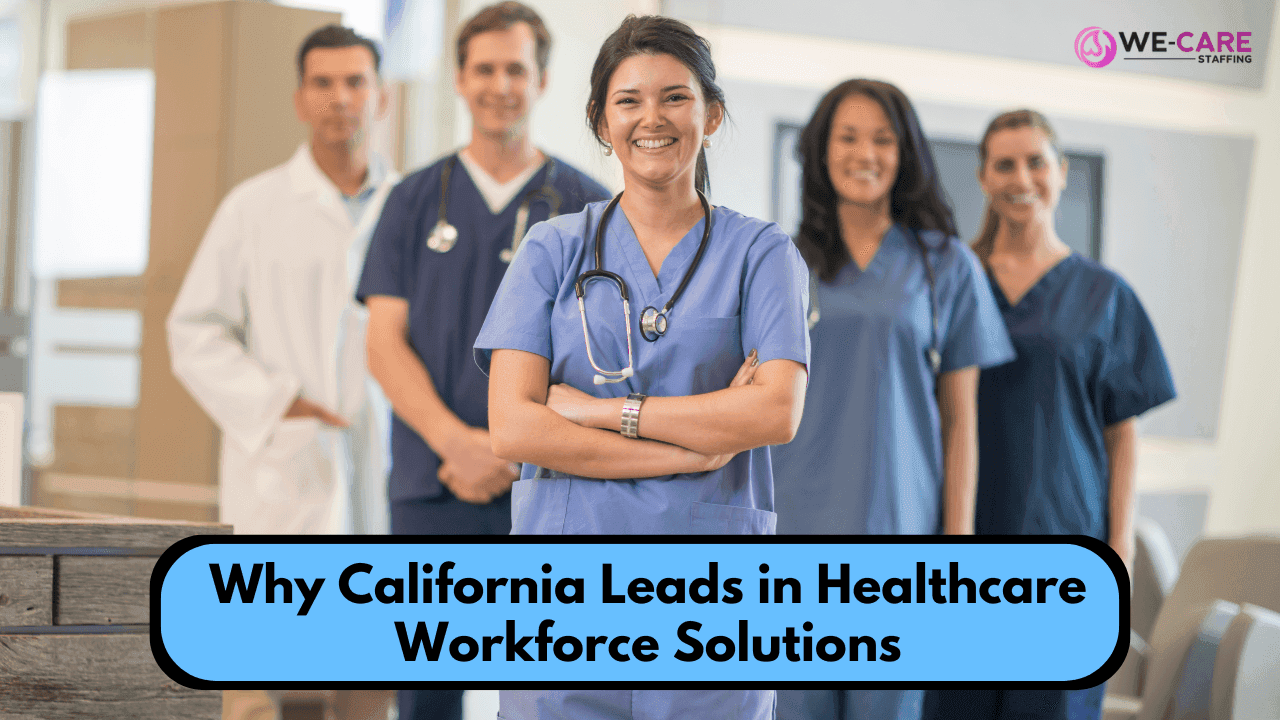
The U.S. healthcare system has big problems. There are not enough healthcare professionals. More patients need help every day. New tech changes things fast. This makes the system very stressed. California does better than other states. It comes up with new ideas quickly. It leads in fixing worker shortages. A big mix of workers helps a lot. Smart rules and new plans make it strong. California shows others how to do it right. It keeps care good for all people.
Strong Healthcare Infrastructure and Policy Support
California has one of the best healthcare setups in the U.S. It is very big and uses the newest tools. The state makes smart rules. It spends money in good ways. This helps grow more workers. It makes the whole system better for everyone. Good plans spread help to all parts of the state.
State-level mandates and regulations are improving staffing quality.
California has some of the strictest rules in the country. Nurse-to-patient ratio laws are very important. They keep patients safe. They make jobs better for nurses too. These rules need more workers. But they build teams that stay long-term. Hospitals can count on them. This raises care levels everywhere in the state. Rules like these stop mistakes. They help tired workers rest more. Safe jobs bring in more good people.
Investments in healthcare workforce development
The state pays a lot for training classes. It gives grants to schools. Community colleges teach healthcare jobs. They train nurses and helpers. This gets ready for more patients. Money for school pulls in new workers. Programs like scholarships help poor students join. The state runs many plans. For example, it funds nursing schools. It helps make more nurse aides and doctors. Loan help keeps workers in jobs. This makes California full of skilled people. Training covers all kinds of care. It meets needs now and later.chcf
Adoption of Advanced Staffing Technologies
California's tech world changes healthcare jobs. Silicon Valley makes new tools. Big hospitals use them fast. Tech links all worker plans together. This makes staffing smooth and smart.
AI-powered scheduling and workforce optimization
Many hospitals use AI computer programs. AI sets up work schedules. It guesses how many workers are needed. This stops worker burnout. It plans for busy weeks ahead. Fewer people miss work. Patients get care on holidays too. AI looks at past days to predict. It saves time for bosses. Workers like fair shifts. This helps on the hardest days. California leads because tech is close by.about.kaiserpermanente
Telehealth and remote care staffing innovations
Telehealth grew a lot after COVID hit. Video calls let doctors help from far away. California uses it to reach small towns. It helps people who lack doctors nearby. New jobs come for home workers. Nurses can check patients on screens. These cuts travel time. More patients get help fast. Remote jobs let moms work from home. It opens doors for many. California mixes telehealth with in-person care well.
Diverse Talent Pool and Specialized Workforce
California has people from all over the world. Many languages are spoken. This helps healthcare a lot. Different workers fit the big mix of patients.
Access to multilingual and multicultural healthcare professionals
Healthcare professionals speak many languages. They match the state's people. This makes care feel personal. Patients trust them more. Doctors understand cultures better. California leads in this kind of staffing. It builds happy teams. Diverse workers stay longer. They give top care. No one feels left out.
Specialized training programs in California institutions
Top schools train for special jobs. They teach emergency help. Kids' care is a big focus. Mental health gets attention. Elder care programs grow fast. Schools like UC get world praise. They make workers ready for tough cases. Hands-on practice helps a lot. Grads fill jobs quickly. California has the best skilled teams now.
High Demand Driving Innovation
More people live in California. They need more healthcare. This push makes new ideas happen.
Population growth and rising patient needs
Hospitals hunt for smart staffing. They add tech tools. They team up with job helpers. This keeps care top-notch. Big cities and small towns both grow. Old people need extra help. Kids and families add up too. Demand never stops. Smart ways fix shortages.
How demand accelerates new staffing models
Daily workers fill short gaps. Travel nurses come fast for busy times. Cross-trained staff do many jobs. This handles surprise sickness waves. Facilities stay open all day. No long waits for patients. New models save money too. They flex with seasons. California uses these best.
Strong Network of Healthcare Staffing Agencies
Agencies help find workers quickly. They know all the rules.
Role of private staffing partners
Top agencies give all kinds of help. Short jobs, travel shifts, contracts, long stays. They plug holes in staffing. Hospitals, clinics, and homes use them. Sudden needs get met the same day. Seasonal busy times pass easily. Skilled workers arrive ready. Agencies check backgrounds. They match the right people for jobs.
Benefits for hospitals, clinics, and long-term care facilities
Places that use agencies gain a lot:
Work runs smoothly every day.
Less time hunting for hires.
Save money on big searches.
Pick from tested pros.
Add or cut staff for busy or quiet days.
No stress in hard times.
This network makes California tough and growing.totalmed
Conclusion
California leads healthcare with hard work. It plans well. Skilled workers fill jobs. New ideas keep coming. Money goes to training. This protects patients. It beats big problems like shortages.
Other states can copy these:
Tech tools for job plans.
Rules that keep all safe.
Cash for classes and skills.
Teams with job agencies.
Mix of cultures and special training.
Questions
Frequently asked
Looking for your next assignment?
Browse current travel contracts, or tell a recruiter what you are after and we will match you against roles before they are listed.